AMAN Coalition Calls for Addressing Gaps in Planning, Contracting, and Oversight to Ensure Timely Delivery of School Textbooks to Students
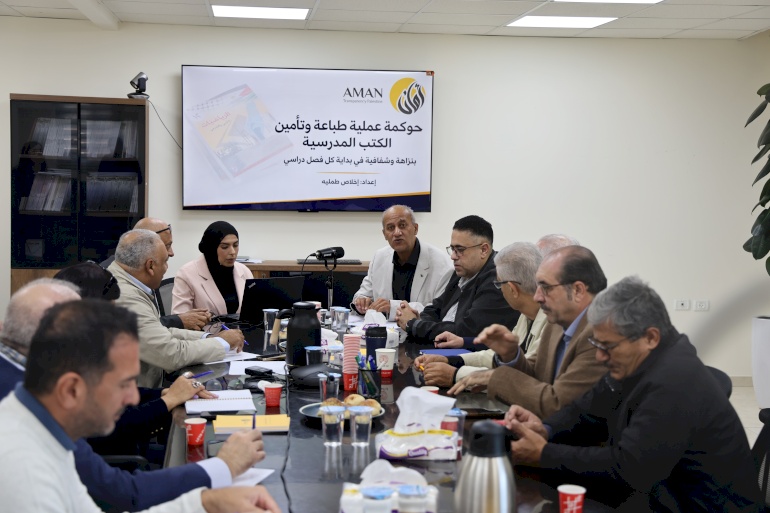
The Coalition for Integrity and Accountability (AMAN) held a discussion session on a research paper titled “Governance of School Textbook Printing and Supply,” which examined the reasons behind recurring delays in printing and delivering school textbooks, the effectiveness of planning, procurement, contracting, and oversight procedures, and their implications for students’ right to education and the efficient management of public funds. The paper also presented recommendations to strengthen integrity, transparency, and accountability throughout the process.
In his opening remarks, AMAN Executive Director Isam Haj Hussein emphasized that the Coalition’s monitoring of this issue comes amid recurring problems related to printing and supplying school textbooks in recent years, despite the fact that the process is cyclical and operates according to predetermined schedules. Therefore, he stressed the need to examine the causes of these delays, identify shortcomings and responsibilities, and take steps to address them to ensure the uninterrupted delivery of this essential educational service.
AMAN: The Financial Crisis Alone Does Not Explain Recurring Delays in Textbook Delivery
Researcher Ikhlas Tamlieh, who prepared the paper, presented its key findings, emphasizing that the financial crisis, despite its importance, is not the only reason behind delays in delivering school textbooks. The paper identified shortcomings in planning and procedures, delays in approving content and issuing and awarding tenders, as well as accumulated outstanding payments owed to printing companies and irregular payment schedules. These factors contribute to recurring delays and weaken the ability to meet established deadlines.
The paper showed that gaps in implementation continue to affect the efficiency of the process, despite the existence of a legal and procedural framework governing school textbook printing, clearly designated responsible authorities, technical specifications, and inspection and acceptance mechanisms. An analysis of tender timelines revealed that some tenders were repeatedly issued or awarded shortly before the start of the school year, reducing the time available for implementation and increasing the likelihood of resorting to supplementary tenders and direct procurement under pressure to ensure textbook availability.
The paper also identified shortcomings in transparency and disclosure regarding the implementation of certain contracts, including completion rates, actual delivery dates, extensions, penalties, and final costs. It further highlighted the absence of a publicly announced policy governing the participation of the National Printing Press, defining its share of the work, establishing criteria for evaluating its performance, and limited disclosure regarding the printing companies actually carrying out the work under subcontracting arrangements.
The findings indicated that, although several entities are involved in the process, there is no unified, detailed framework defining each entity’s responsibilities for implementation stages and delays, accountability mechanisms, and corrective measures. This underscores the need to move beyond simply monitoring procedural compliance toward assessing actual outcomes and the extent to which textbooks are delivered on time.
Recommendations for a Binding Government Framework, a Clear Timeline, and Accountability for Delays
The paper called on the Cabinet to adopt a unified, binding government framework for governing the school textbook printing process, including a clear timeline for all stages and a well-defined matrix of responsibilities and accountability measures. It also recommended developing a plan to settle outstanding payments owed to printing companies and adopting a written, publicly announced policy regulating the National Printing Press’s participation and the mechanisms for evaluating its performance.
The paper recommended that the Ministry of Education and Higher Education establish a fixed deadline for approving textbook content and ready-for-print copies and develop a comprehensive annual plan based on actual needs. The plan should ensure that major tenders are issued and awarded early enough to allow printing companies sufficient time to complete production and delivery.
The recommendations also emphasized the need to adopt a payment schedule linked to completion milestones, verify the technical and production capacities of printing companies, and require bidding companies to disclose the entities that will actually carry out the work.
The paper further called for expanding disclosure on the Unified Public Procurement Portal to include information on contract implementation and direct procurement, completion rates, delivery dates, extensions, and penalties. It also recommended developing a database to evaluate the performance of suppliers and printing companies, strengthening transparency and enabling oversight of the efficiency of public spending.
The paper stressed the importance of subjecting all stages of the process to monitoring and oversight, identifying the causes of delays and the entities responsible, and taking the necessary corrective measures to prevent recurrence. Oversight should not be limited to verifying compliance with procurement and contracting procedures but should also ensure that textbooks actually reach schools and students in the required quantities, according to the specified standards, and within the established deadlines.
Ministry of Education Outlines Technical, Financial, and Logistical Challenges
During remarks by representatives of the Ministry of Education, Ministerial Advisor Ali N’eirat explained that the printing and delivery of school textbooks face challenges related to the limited number of printing companies and their production capacities, as well as difficulties in securing raw materials, particularly paper, amid regional and international circumstances. He noted that delays in delivering textbooks for certain grades did not exceed two weeks.
He added that Israeli checkpoints and restrictions had contributed to delays in delivering textbooks to certain areas, explaining that approximately 60–70% of students had received their textbooks by the beginning of the school year.
For his part, Nizam Dar Saeed, Director General of Supplies and Textbooks at the Ministry, noted that the process requires printing approximately 10 million textbooks annually. He explained that delays during the current year were linked to tendering procedures and their restrictions, alongside technical and financial challenges.
He further explained that the preparation of printing schedules depends on the results of the “Statistical Register,” which is based on an inventory of textbooks remaining in schools at the end of the academic year. This affects the possibility of bringing forward certain stages of the process. He also emphasized that the Ministry is subject to oversight, as school textbook printing is connected to the management of public funds.
Calls to Bring Forward Tender Deadlines, Clarify Responsibilities, and Prevent Recurring Delays
Participants in the discussion stressed the need to review the timeline adopted for printing and supplying school textbooks and to bring forward the planning, tender issuance, and contract award stages. This would allow sufficient time for printing and delivery and help prevent recurring delays at the beginning of each school year.
Participants also called for reviewing existing procedures and developing practical solutions within the legal frameworks governing public procurement. These measures should strike a balance between procedural compliance and ensuring timely and efficient implementation, as well as strengthening coordination among the relevant government entities.
AMAN emphasized that the success of the school textbook printing process should not be measured merely by the completion of procurement, contracting, and printing procedures, but by the ability of the responsible authorities to ensure that textbooks reach all students at the beginning of each academic semester. The Coalition stressed that addressing recurring delays requires proactive planning, transparency in contract implementation, clearly defined responsibilities, and accountability for shortcomings, thereby safeguarding students’ right to education and ensuring the efficient use of public funds.