Reform and Strengthening National Resilience Begin with Elections That Produce an Effective Legislative Council Capable of Ensuring Oversight and Accountability
Civil Society Team: 2026 Public Budget Conference Calls for Spending Controls and Stronger Oversight and Transparency in the Management of Public Funds
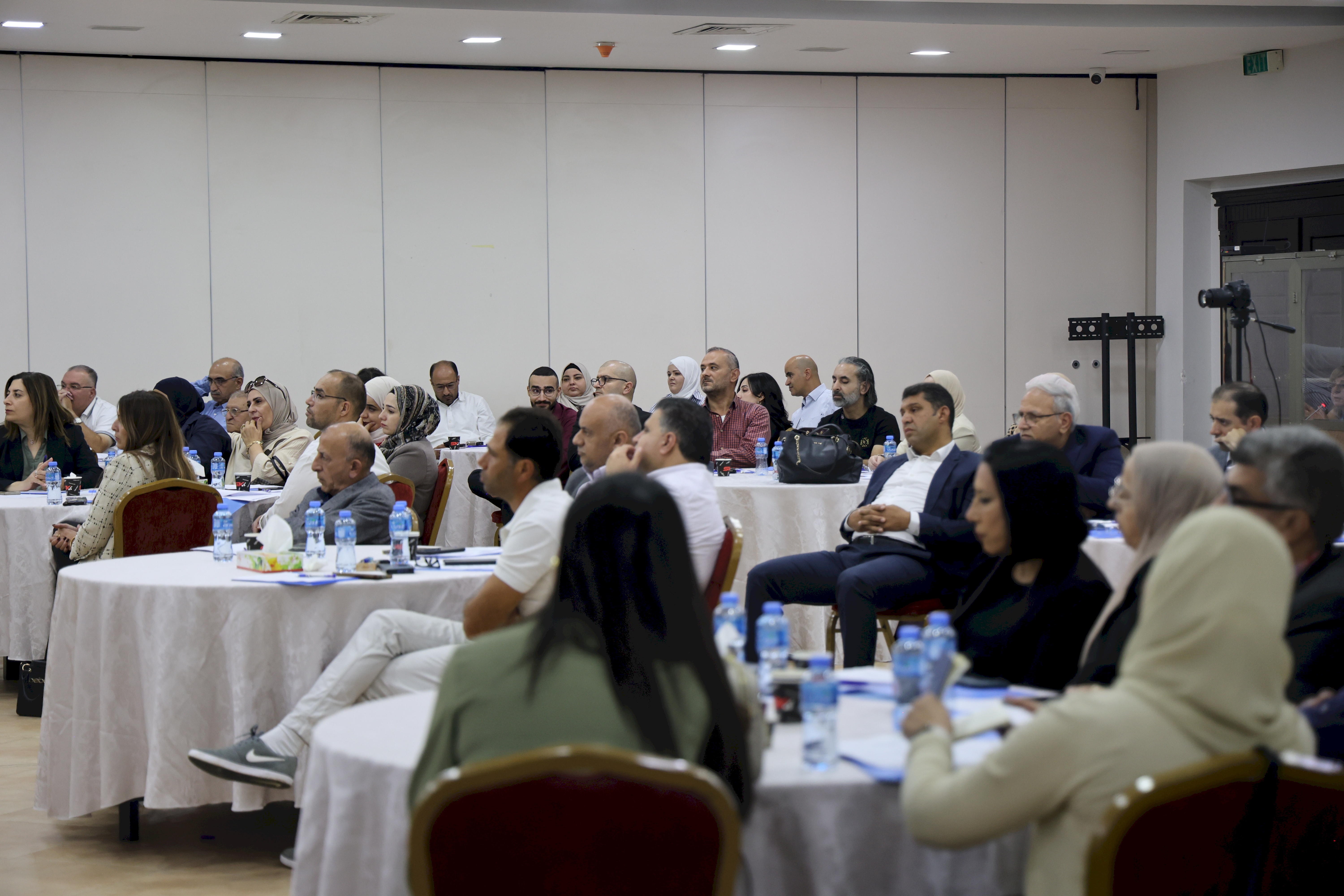
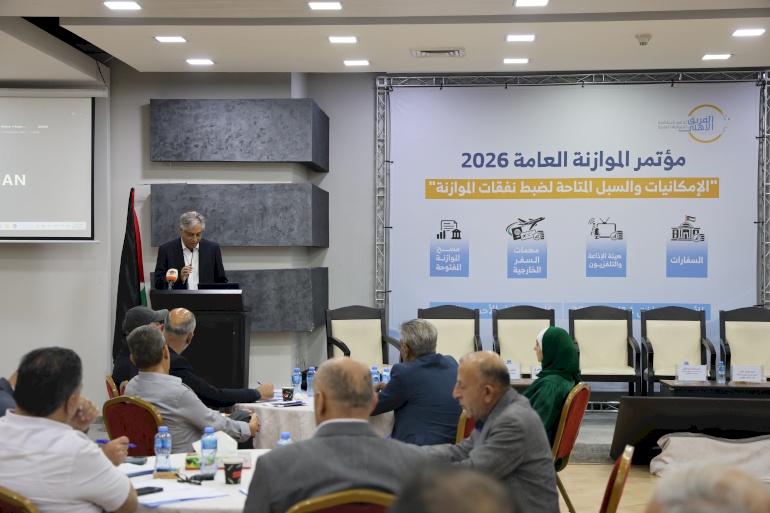
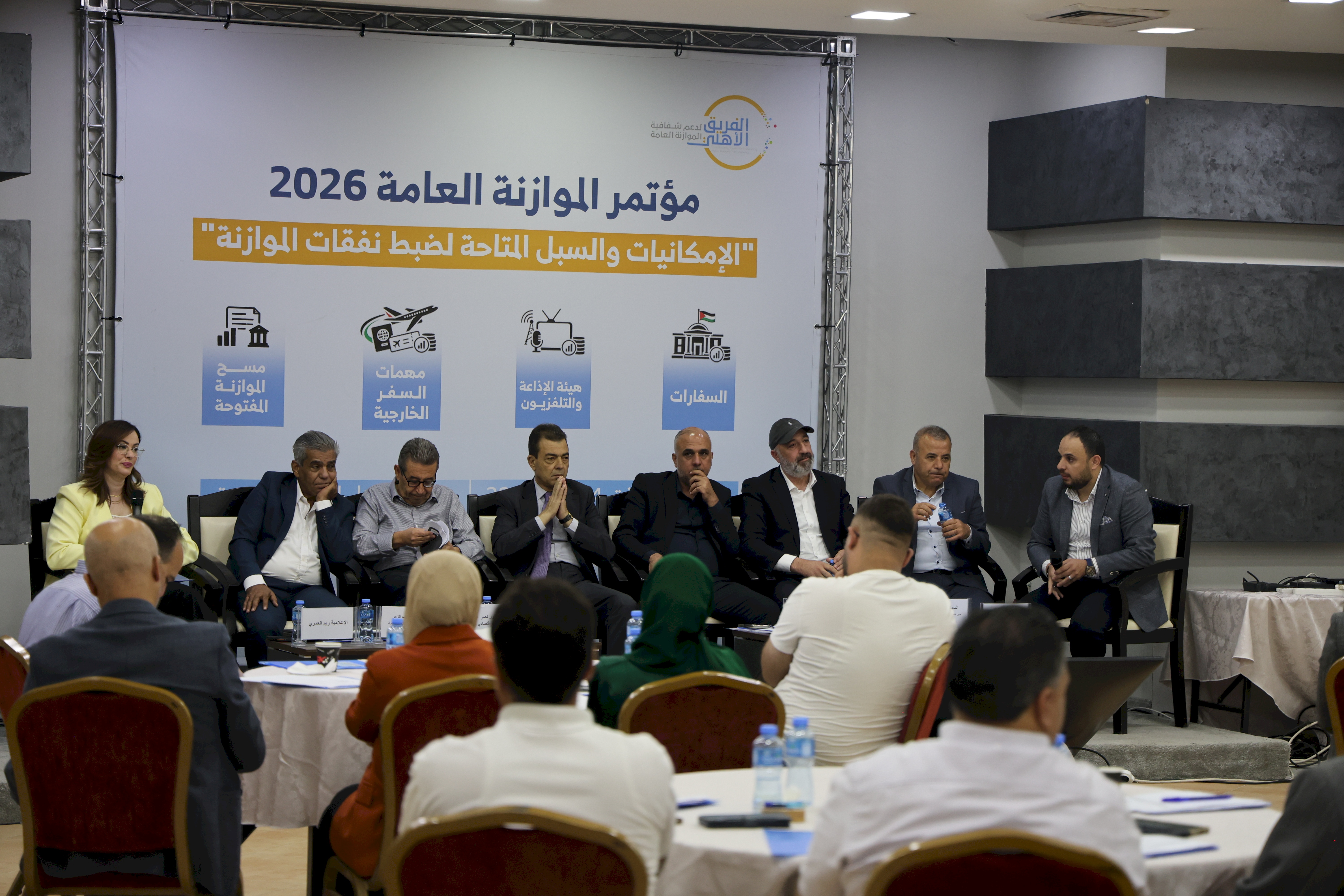
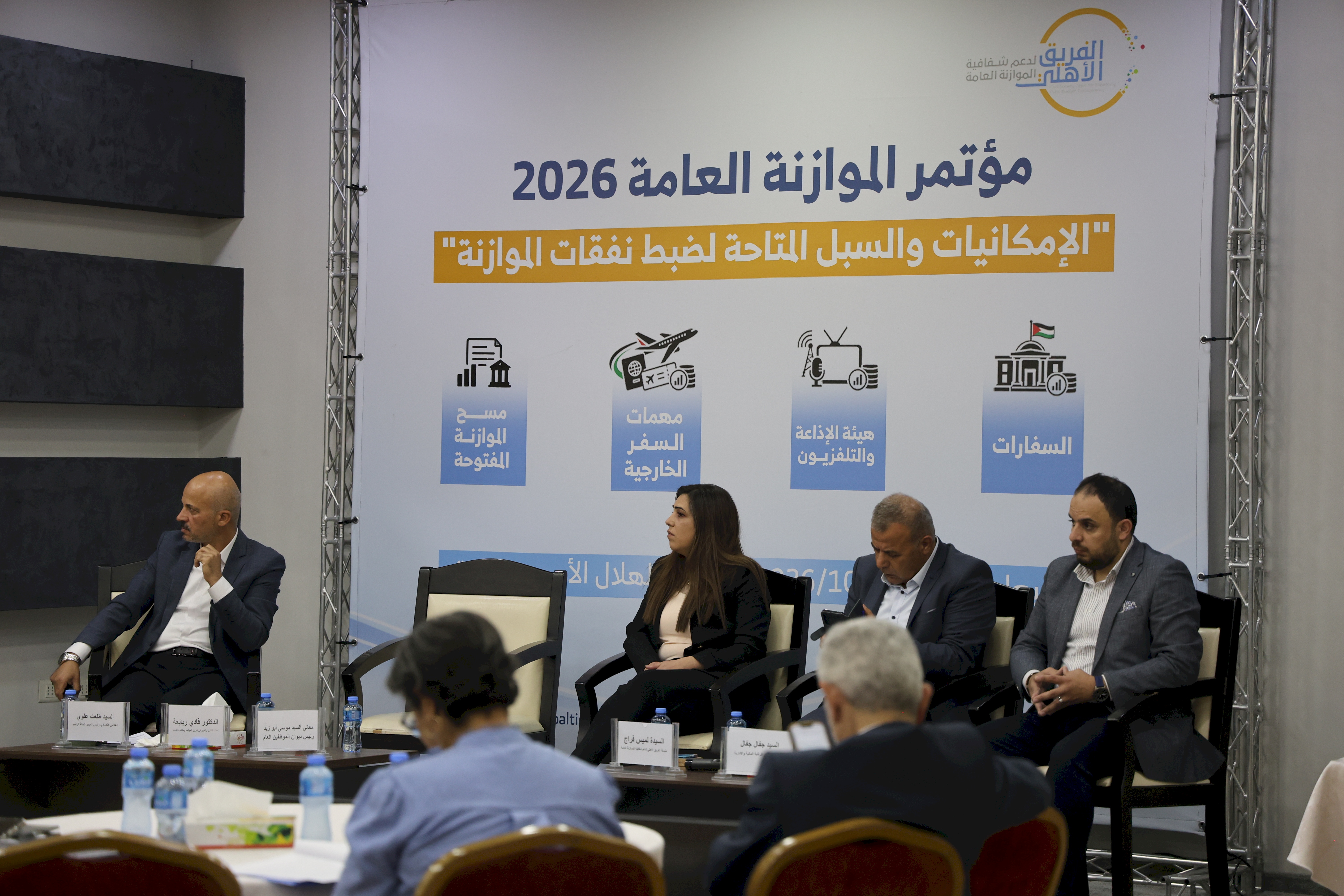
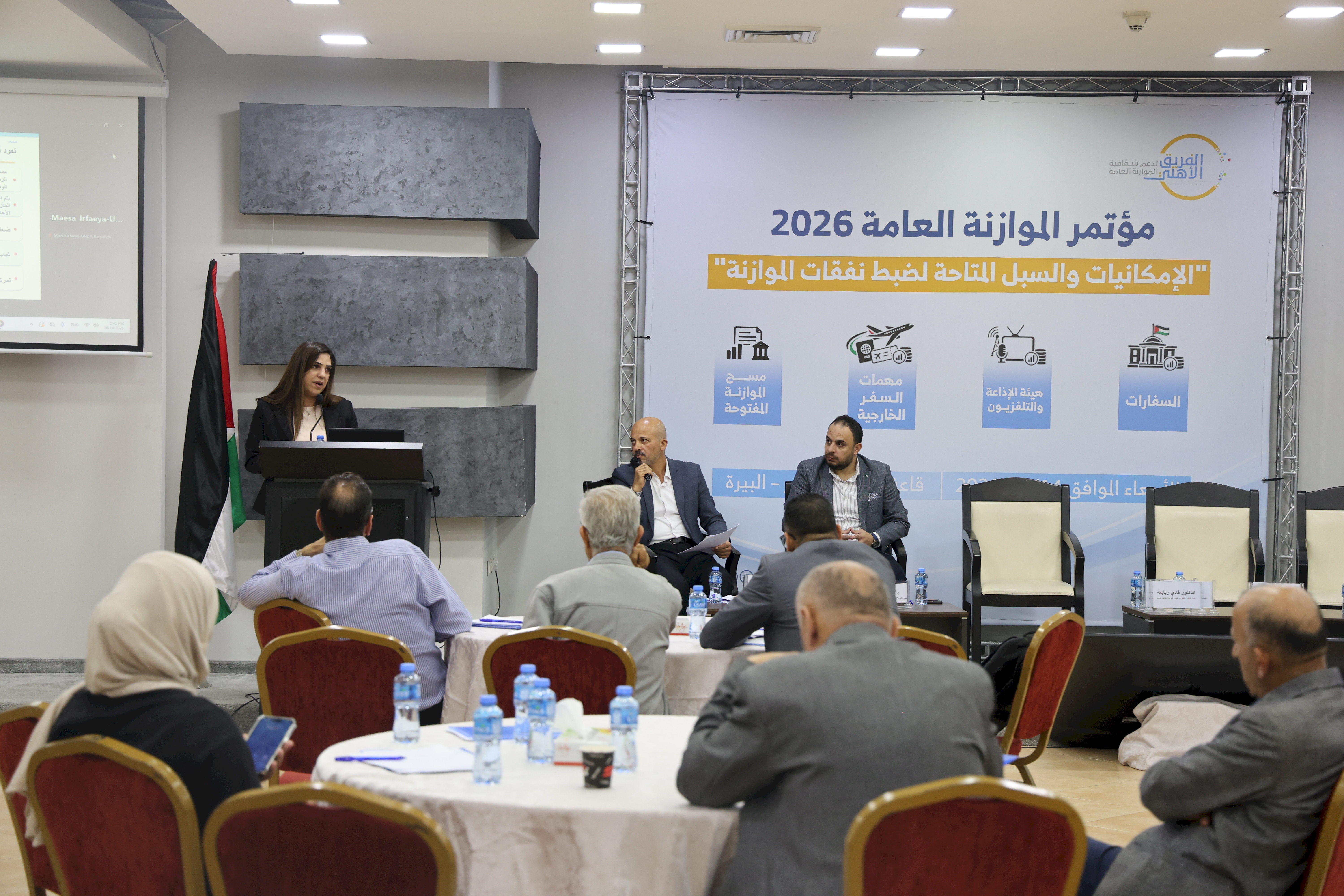
Ramallah - The Civil Society Team for Enhancing Public Budget Transparency held its 2026 Public Budget Conference, titled “Available Options and Approaches for Controlling Budget Expenditures,” to examine ways to rationalize public spending, improve its efficiency, and direct limited resources toward national priorities and essential services amid the financial crisis, declining revenues, and a widening financing gap. The conference also sought to develop practical recommendations to strengthen transparency and accountability in the management of public funds without compromising citizens’ rights or the level of services provided to them.
The conference addressed several areas in which expenditures, management mechanisms, and governance require review. These included embassy budgets and the Palestine Public Broadcasting Corporation (PBC), as well as the administrative and financial lines of authority governing both, overseas participation and official missions by public employees, and the corruption risks associated with travel, accommodation, and allowance expenditures. It also reviewed the findings of the Open Budget Survey and the state of transparency, access to information, and citizen participation in budget preparation and implementation. Representatives of relevant public bodies and civil society organizations participated, including the Ministries of Foreign Affairs and Finance and the Palestine Public Broadcasting Corporation.
National Resilience and Greater Institutional Efficiency
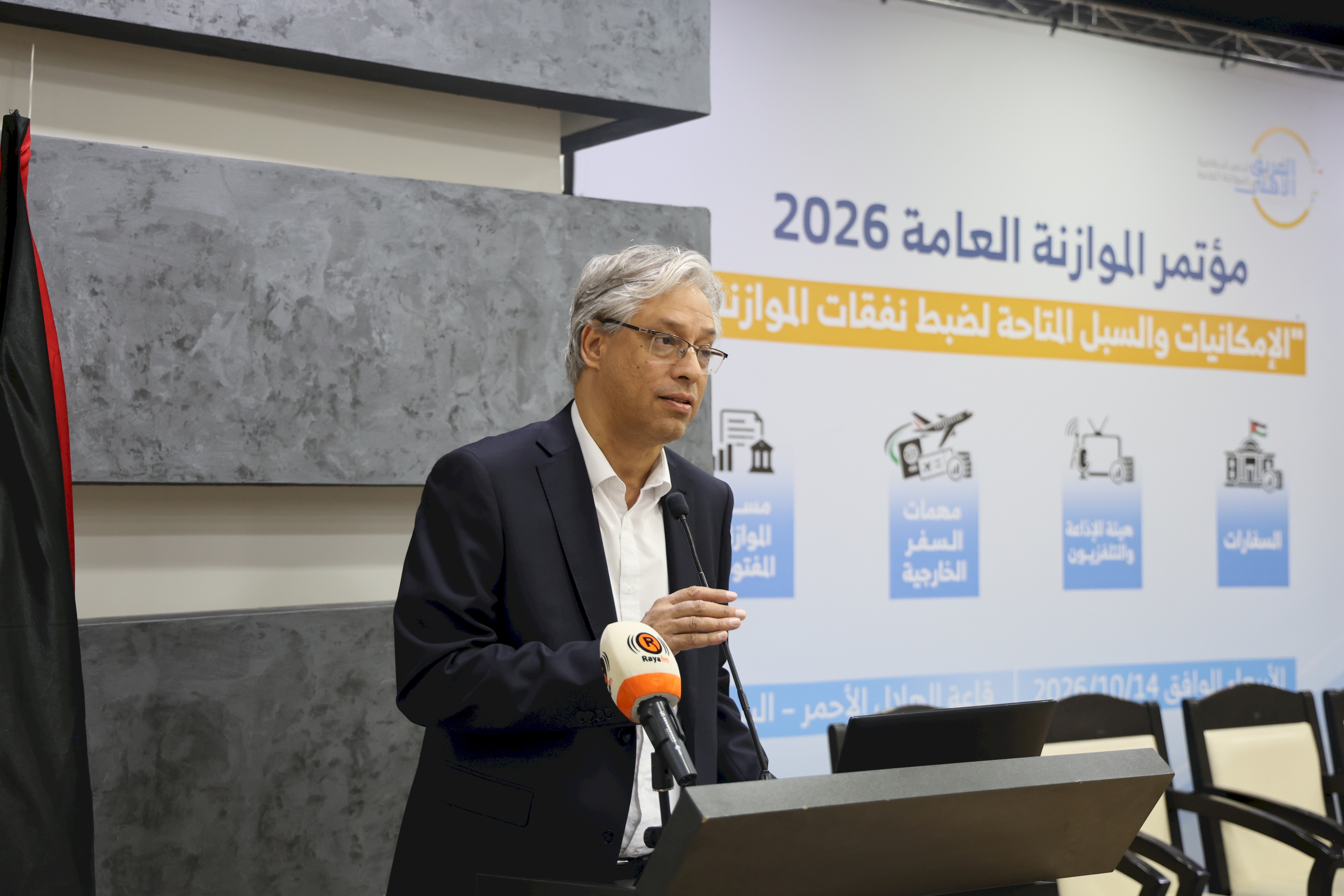
Opening the conference, Abdul Qader Al-Husseini, Chairman of AMAN’s Board of Directors, highlighted the difficult circumstances facing the Palestinian people amid attacks by the Israeli occupation and settlers, as well as the unprecedented financial crisis confronting the Palestinian Authority as a result of the withholding of clearance revenues, declining revenues, and mounting debt, all of which threaten its ability to provide essential services.
Al-Husseini stressed that national resilience cannot be achieved solely by confronting the policies of the occupation. It also requires strengthening the efficiency of national institutions, protecting public funds, improving resource management, and rationalizing expenditures in ways that enhance citizens’ confidence in their institutions and their ability to continue functioning. He pointed to the role of the Civil Society Team for Enhancing Public Budget Transparency in supporting financial and administrative reform through studies, reports, and practical recommendations, noting that the government has adopted several of its recommendations. This, he said, underscores the importance of partnership between civil society and public institutions in strengthening national resilience.
Elections: A Starting Point for Reform and Stronger National Resilience
Al-Husseini stressed that strengthening national resilience is a collective responsibility requiring coordinated efforts by public institutions and society. He said that reform, the renewal of democratic life, and strengthening national institutions’ ability to address challenges must begin with holding elections on schedule and without delay. He called for elections to be inclusive and comprehensive, excluding no one and ensuring participation by all. Such elections, he said, would strengthen accountability, renew legitimacy, and rebuild trust between citizens and their national institutions.
Correcting the Financial and Administrative Lines of Authority for Embassies and Strengthening Compliance with Palestinian Financial Laws and Regulations
Researcher Youssef Al-Zummar presented a report on Palestinian embassy budgets, their administrative and financial lines of authority, and the extent to which governance principles are applied. The report examined problems arising from overlapping legal and administrative authorities and the continued management of embassies’ financial and administrative affairs through the Palestine National Fund, despite provisions of Palestinian Diplomatic Corps Law granting the Ministry of Foreign Affairs authority to supervise diplomatic missions at the diplomatic, administrative, and financial levels.
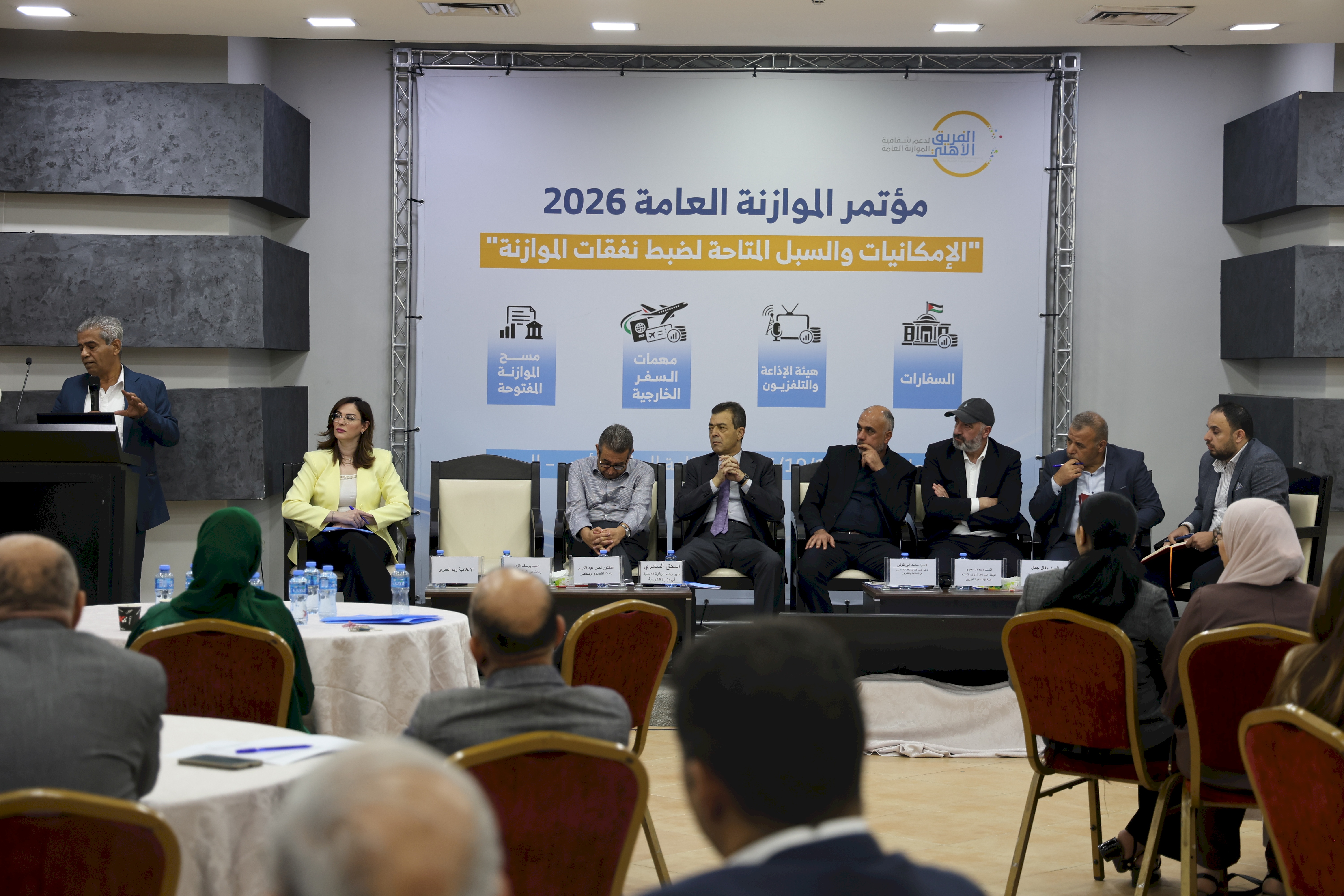
The report identified several challenges to greater transparency and oversight of embassy budgets, most notably the irregular publication of audited financial statements, the limited exercise by the State Audit and Administrative Control Bureau (SAACB) of its auditing role with respect to embassies, the existence of multiple regulatory frameworks governing appointments and financial and administrative procedures, and the lack of published information on tenders and procurement processes, including the leasing of embassy premises.
Recommendation: Establish a Central Financial Oversight Department and Automate Financial and Accounting Procedures to Strengthen Expenditure Controls
The report proposed 2 possible reform tracks. The first would involve applying the Palestinian Authority’s financial laws and regulations, including bringing embassies under the unified computerized financial system, placing embassy employees on the unified payroll system, assigning financial controllers reporting to the Ministry of Finance, and enabling SAACB to exercise its audit powers.
The second track would involve correcting existing procedures and lines of authority if the Palestine National Fund continues to manage embassies’ financial and administrative affairs. This would include redistributing responsibilities among the ambassador, financial director, and financial controller to ensure separation between the authority to approve expenditures, the execution of financial transactions, and oversight of those transactions, thereby reducing conflicts of interest and excessive concentration of authority.
In this context, the report recommended establishing a central financial oversight department and granting the financial controller authority to approve or reject financial transactions in accordance with applicable regulations and available allocations. It also recommended joint signatures on bank accounts and connecting embassies to a computerized financial system that allows transactions to be monitored and expenditures controlled.
The report further stressed that consular revenues should be remitted in full to central revenue accounts rather than being used directly to cover embassy expenses. Operating expenditures should instead be covered through designated financial transfers. It also recommended preparing periodic financial reports that include trial balances and bank reconciliation statements, together with the relevant invoices and supporting documents, and submitting them to the competent authorities for audit.
The report emphasized the importance of reviewing existing positions at embassies and the nature of the services they provide, automating financial and accounting procedures, and strengthening oversight of public spending. These measures would help address the dual administrative and financial lines of authority and reinforce governance, transparency, and accountability in the management of embassy budgets.
Limited SAACB Oversight of Embassies
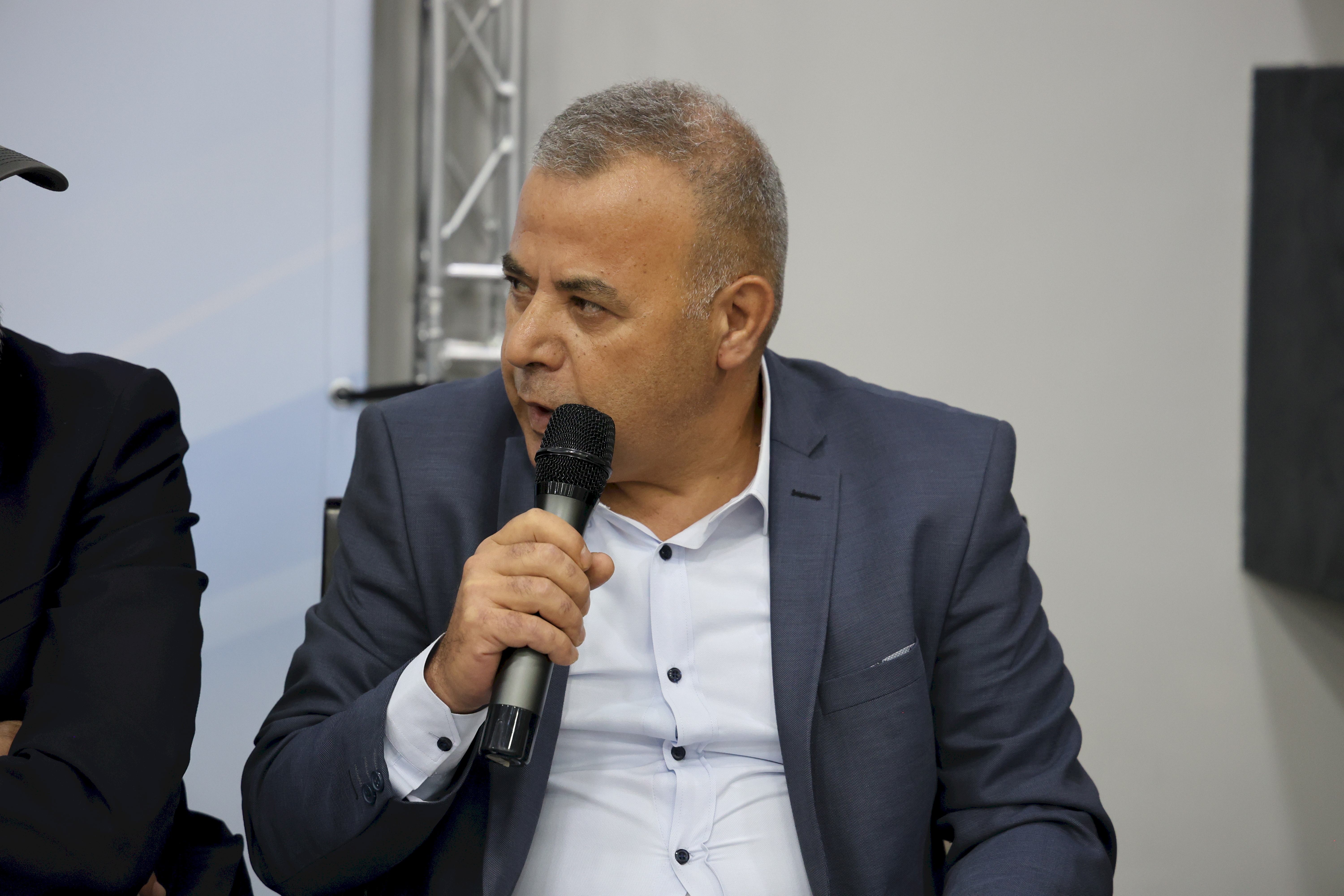
Jaffal Jaffal, representing the State Audit and Administrative Control Bureau, explained that the Bureau’s oversight does not extend to all embassies but is conducted on the basis of specific assignments. He noted that the legal framework governing oversight of the Palestine Liberation Organization (PLO) and its affiliated bodies has not been sufficiently clear, even though funding provided to them from the public budget constitutes public funds.
According to the figures he presented, funding from the public budget amounted to approximately 1.09% for the PLO and 2.39% for the Palestine National Fund, for a combined total of approximately 3.5% of the public budget. He noted that there are reservations regarding the auditing of funds transferred to both entities and that the Ministry of Finance has limited ability to verify how these funds are spent and whether such expenditures comply with the law. He stressed the need to enable the Ministry of Finance to review audit findings or to subject these funds to oversight in order to strengthen accountability for public funds.
Ministry of Foreign Affairs: Embassies Fall Under the Palestine National Fund
Ishaq Al-Samari, representing the Ministry of Foreign Affairs, explained that the Palestine National Fund was established before the embassies and that the embassies remain under its authority, with their related expenditures processed through the Fund. He added that the Embassies Committee includes representatives of the Ministry of Foreign Affairs and members of the Palestine Liberation Organization and carries responsibilities related to diplomatic affairs in general. He explained that the Ministry of Foreign Affairs exercises political oversight, while the Ministry’s own budget forms part of the public budget and is subject to the financial laws of the State of Palestine. He also noted that disbursement procedures require the necessary approvals from the Office of the President and the Ministry of Finance.
Ministry of Finance: Salaries Account for the Largest Share of Embassy Expenditures
Ahmad Al-Jitawi, Director of the Administrative Affairs Department at the Ministry of Finance, explained that the 2025 and 2026 budgets were prepared under the emergency system in light of Palestine’s financial circumstances. He said that allocations for embassies account for approximately 1.18% of the government budget, are financially administered through the Palestine National Fund, and are discussed annually.

Al-Jitawi explained that salaries account for the largest share of embassy expenditures, stressing the need to monitor operating expenses monthly and control spending. As part of expenditure-reduction measures, approximately 400 employees have been brought under the approved system for controlling expenditures and preventing budget ceilings from being exceeded, without affecting their financial entitlements. He added that the Ministry of Finance, in cooperation with the Ministry of Foreign Affairs, is developing an electronic system to manage embassy revenues and incorporate them into the Ministry’s financial system, thereby increasing automation and strengthening financial oversight. He also emphasized the importance of the financial controller’s role in reviewing expenditures and determining priorities before they are approved.
Recommendations to Activate Governance Boards and Strengthen Institutional Oversight at the Palestine Public Broadcasting Corporation
Researcher Dr. Nasr Abdel Karim presented a report titled “Governance, Transparency and Accountability in Light of the Legal, Institutional and Financial Framework of the Palestine Public Broadcasting Corporation.” The report examined developments at the Corporation since AMAN’s 2013 report, focusing on its legal framework, mechanisms for oversight of its financial resources, and the availability of information concerning its operations and expenditures, with the aim of identifying key challenges and proposing recommendations to strengthen transparency and accountability.
The report noted that Presidential Decree No. (2) of 2010 remains the primary legal basis governing the Corporation, despite developments in the public media sector and public administration. It identified a gap between the legal framework and actual practice, particularly given that the Board of Trustees and Board of Directors have not been active in recent years. The report recommended reviewing the legal framework and reactivating or reorganizing the governance boards in a manner that clearly defines responsibilities and strengthens institutional oversight while preserving the Corporation’s professional and editorial independence.
Salaries Accounted for Approximately 57% of Expenditures in 2025
The report found that salaries and wages accounted for approximately 57% of the Corporation’s total expenditures in 2025, compared with only 4.4% for capital and development expenditures. It recommended reviewing the Corporation’s legal and institutional framework, publishing its financial and administrative regulations, strengthening the independence of internal audit and enhancing oversight and accountability, and publishing information relating to the budget, plans, projects, and annual reports. The report also called for the preparation of an investment plan to modernize infrastructure, the development of mechanisms for evaluating the efficiency of expenditures and procurement, and the establishment of institutional performance indicators.
Palestine Public Broadcasting Corporation: Calls for a Dedicated Financial and Administrative System Reflecting the Nature and Requirements of Its Work
Mahmoud Amr, Assistant Undersecretary for Financial Affairs at the Palestine Public Broadcasting Corporation, explained that the Corporation is subject to the Civil Service Law, the public budget, and oversight by the State Audit and Administrative Control Bureau. He affirmed its commitment to applicable laws and expenditure-rationalization measures, despite their impact on operations, noting that the Corporation continues to operate around the clock, 7 days a week.

Amr called for the adoption of a dedicated financial and administrative system that would provide the necessary budgets and reflect the nature and requirements of the Corporation’s work. He pointed to the low salaries received by journalists relative to the risks associated with their work. He said the Corporation employs approximately 1,350 people, including 350 in Gaza, where its office was destroyed during the war. It operates 4 satellite television channels, 4 radio stations, and approximately 50 digital platforms, in addition to offices in 5 Arab countries. He added that promotions are governed by the Civil Service Law and that 19 employees hold senior-category positions.
AMAN: An Effective Board of Trustees Is Needed to Safeguard Independence and Accountability
Dr. Azmi Al-Shuaibi, Anti-Corruption Adviser to AMAN’s Board of Directors, explained that the files relating to embassies and the Palestine Public Broadcasting Corporation were selected for discussion because of the lack of clarity surrounding their accountability and financial oversight frameworks, given that both report to the Office of the President rather than the government. He stressed the need to establish clear lines of effective accountability. He added that the independence of the Palestine Public Broadcasting Corporation, which has had a dedicated financial and administrative system since 2007, requires the activation of an effective Board of Trustees appropriate to the nature of that independence. The Board should be responsible for setting policies and priorities and monitoring performance, thereby ensuring clear responsibilities and stronger governance, oversight, and accountability.
Corruption Risks in Overseas Assignments: Calls to Regulate Official Travel and Rationalize Public Spending
A study prepared by Dr. Fadi Rabaya examined corruption risks associated with the nomination and assignment of public employees to overseas training courses and official work missions. It focused on potential gaps in the governance system, selection criteria, repeated participation, and the extent to which such assignments are linked to job-related and institutional needs.
The study noted that travel and overseas official missions have incurred substantial costs, despite these expenditures not being presented as a separate and clearly identifiable item in the public budget, making it difficult to determine their total cost accurately. It also noted that the Ministry of Finance did not provide the study’s author with the requested financial statistics, preventing the study from determining the actual level of expenditures and potential financial losses.
The study identified government efforts to regulate overseas assignments, including a 2024 Council of Ministers decision suspending assignments to overseas training courses that are not fully sponsored, as well as the oversight role of the General Personnel Council. Nevertheless, the study found that gaps remain, particularly in relation to overseas official work missions, nomination and selection criteria, repeated employee participation, and the extent to which assignments are linked to capacity-building plans and the priorities of government institutions.
Recommendations to Strengthen Oversight of Travel and Adopt Training Plans with Dedicated Budgets
The study recommended setting an annual ceiling of no more than 3 overseas travel missions per employee, while allowing exceptions through reasoned decisions. It also recommended establishing a unified electronic system to monitor overseas assignments and issue alerts when the ceiling is exceeded. It called for the adoption of a standardized nomination form stating the reasons for selecting an employee, the cost of the mission, its funding sources, and its relevance to the employee’s duties, as well as stronger oversight of travel financed through project budgets. The study also stressed the need to evaluate overseas participation and training annually and link them to institutional needs and capacity-building plans in order to reduce corruption risks and rationalize public spending.
Jaffal Jaffal of the State Audit and Administrative Control Bureau noted that most ministries lack clear training plans based on assessments of employee needs, including training associated with travel missions. He explained that training allocations are not determined on the basis of detailed needs but rather according to available resources, underscoring the need to link such allocations to clear plans for developing employees’ capacities. Al-Jitawi, meanwhile, stressed that the government is moving forward with its reform plan and will introduce stricter measures to control travel expenditures and official missions.
Palestine’s Open Budget Survey Results: 14 out of 100 for Transparency, 19 for Oversight, and Zero for Public Participation
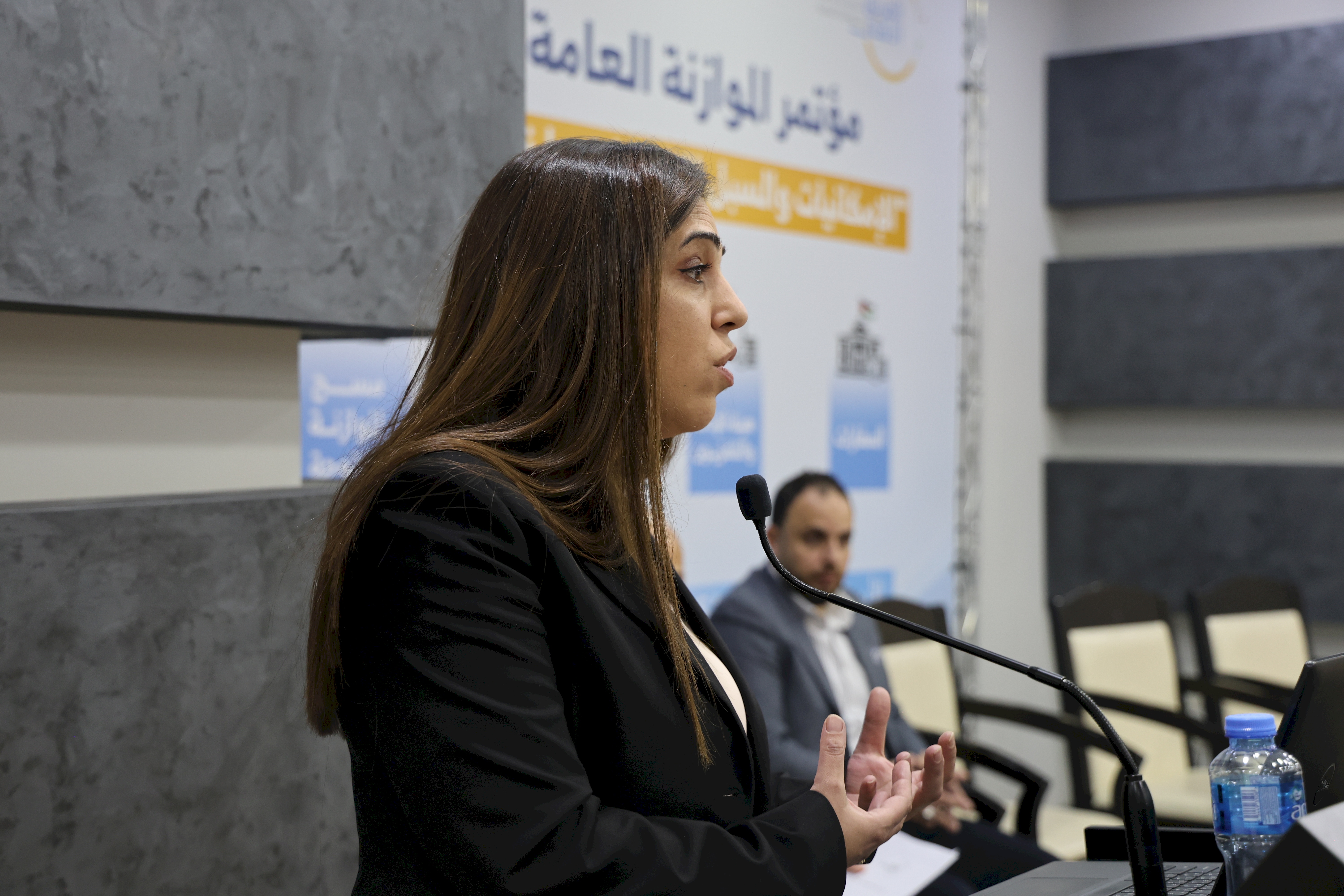
Lamis Farraj, Coordinator of the Civil Society Team for Enhancing Public Budget Transparency, presented Palestine’s results in the 2025 Open Budget Survey. She noted a limited improvement in the budget transparency and oversight indicators, while public participation remained absent, with a score of 0 out of 100.
The survey is issued by the International Budget Partnership, and the 2025 round marked the survey’s 10th consecutive edition, covering approximately 83 countries worldwide. Palestine participated for the second time through the Coalition for Accountability and Integrity (AMAN), which monitors indicators relating to public budget transparency, oversight, and public participation throughout the budget preparation and implementation process.
Palestine’s budget transparency score increased from 8 out of 100 in 2023 to 14 out of 100 in 2025, while its oversight score rose from 17 to 19 out of 100. By contrast, the public participation score remained at 0 out of 100, reflecting the continuing challenges that prevent citizens from having formal and effective opportunities to participate in the budget process.
Absence of Legislative Oversight and Centralization of Decision-Making
The report attributed Palestine’s low scores to several factors, foremost among them the absence of the Palestinian Legislative Council, which is the formal oversight body responsible for scrutinizing the budget throughout its various stages, as well as the centralization of budget-related powers and decisions. It also noted that the concentration of multiple responsibilities in the Office of the President limits its ability to perform an effective oversight role given the breadth of its responsibilities and limited staffing.
According to the report, budget preparation and publication are also affected by challenges resulting from the Israeli occupation, particularly the withholding of clearance revenues and the resulting difficulties in financial planning, setting priorities, and allocating resources to vital sectors, in addition to delays in publishing the draft budget law.
Institutionalizing Participation and Expanding Access to Information Through Timely Publication
The report stressed the importance of strengthening the participation of citizens and civil society organizations throughout all stages of the budget cycle, from preparation and approval through implementation and evaluation, in order to move away from unstructured consultations or token participation toward genuine, institutionalized participation.
It also emphasized the need to expand the publication and public availability of financial information through multiple channels. This should include publishing a Citizens Budget for the draft budget before its approval, enabling citizens to review the details and participate at the appropriate stage, rather than limiting publication to the approved budget.
Strengthening Oversight and Responding to Audit Recommendations
In the area of oversight, the report stressed the importance of building on the role performed by the State Audit and Administrative Control Bureau by taking the observations and recommendations contained in audited final-account reports seriously and translating them into reform measures that improve the management of public resources and strengthen accountability.
The survey findings conclude that improving public budget transparency in Palestine requires developing oversight and accountability mechanisms, expanding public participation, and ensuring access to information throughout the different stages of the budget cycle. These measures would strengthen trust between citizens and the government and contribute to better management of public resources.
Elections and the Formation of an Effective Legislative Council Are a Path to Reform, Stronger Resilience, and the Protection of Rights and Essential Services
At the conclusion of the conference, participants stressed the importance of political and institutional reform as a means of strengthening national resilience and improving the management of public resources. They called for elections to be held on schedule, resulting in the formation of an effective Legislative Council capable of fulfilling its role in overseeing the performance of the executive branch and adopting the necessary legislation in a timely manner. Revitalizing democratic life and strengthening accountability are fundamental to ensuring more efficient and transparent management of public funds and directing resources toward national priorities in ways that protect citizens’ rights and strengthen their access to essential services.