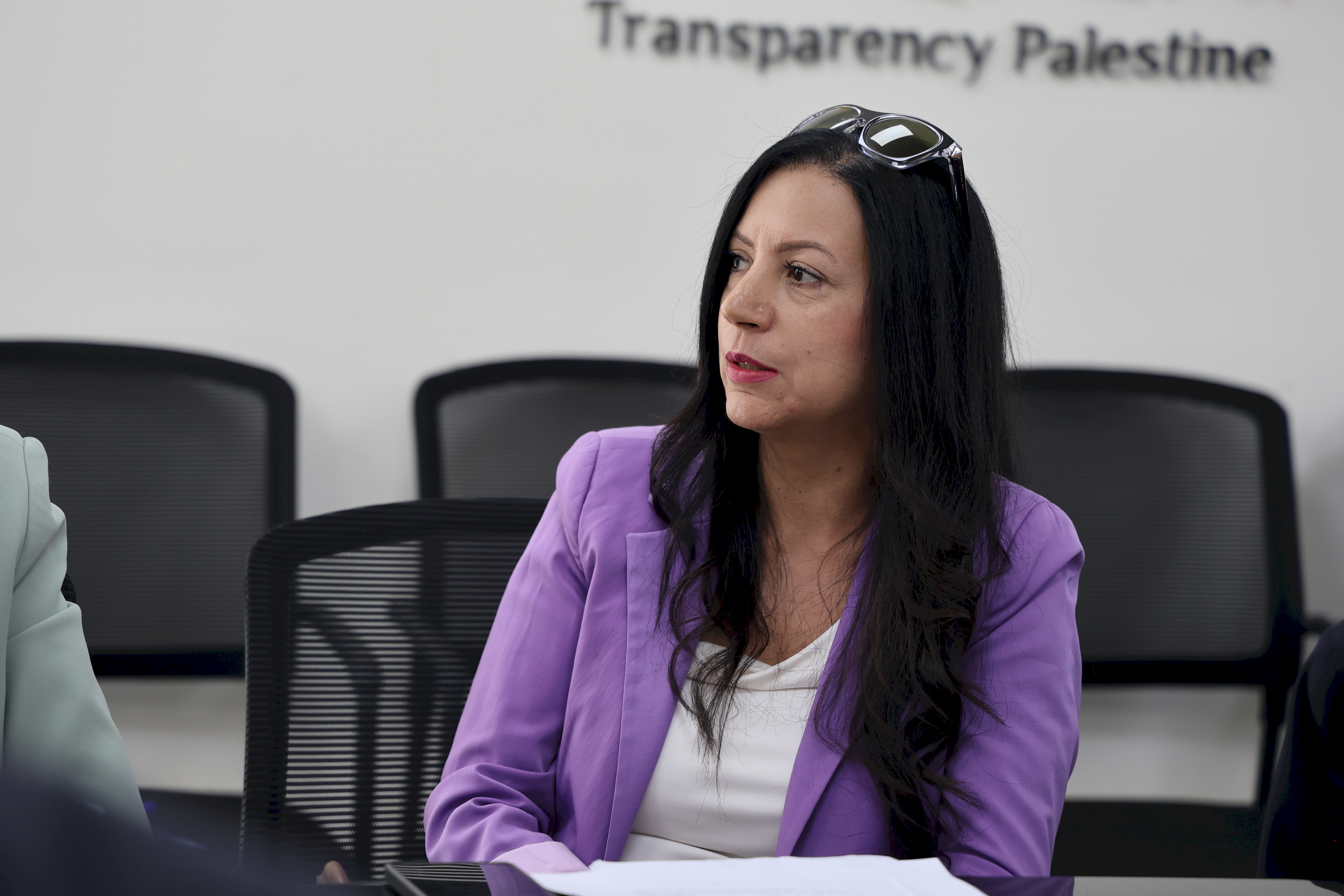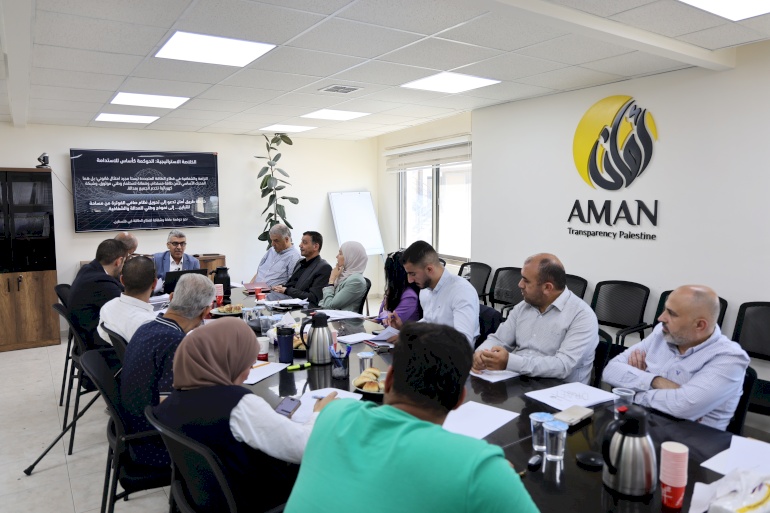
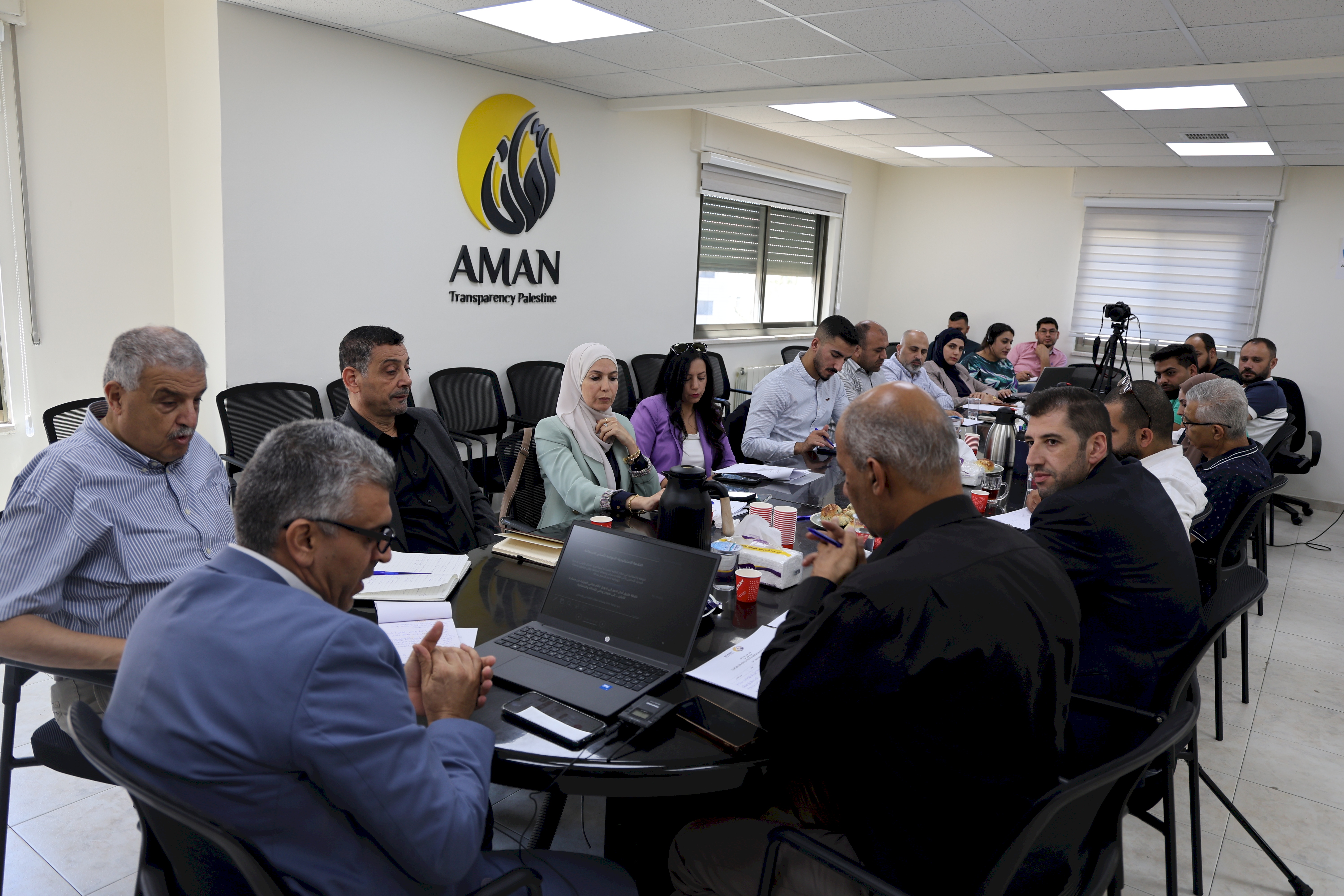
Ramallah - The Coalition for Integrity and Accountability (AMAN) held a discussion session on a draft report entitled “Renewable Energy Governance in Palestine: The State of Fairness and Integrity in the Net Billing System.” The report examined the fairness, transparency, and impartiality of the current system and the extent to which the associated fees, charges, and procedures align with the principles of governance, integrity, and the public interest.
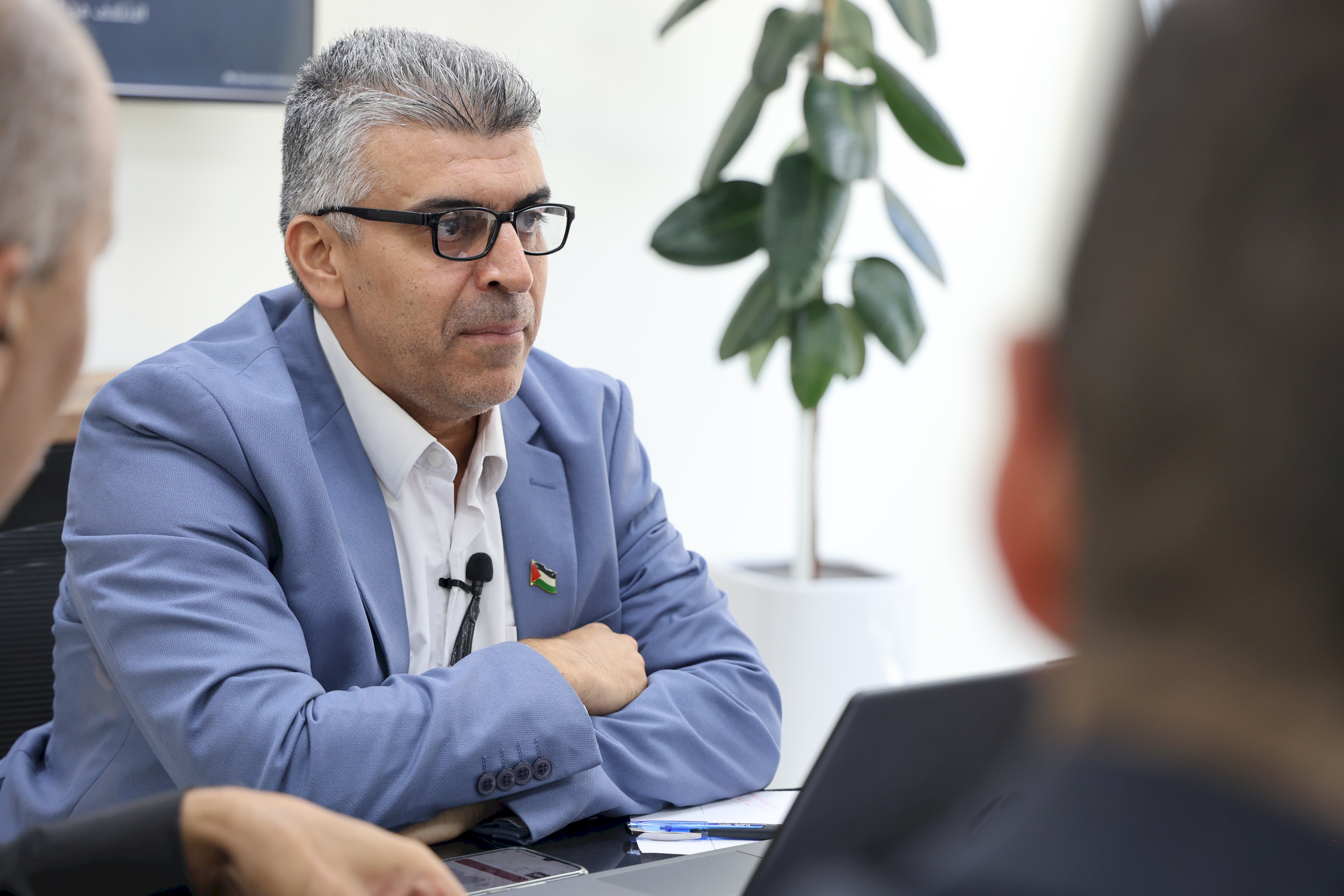
AMAN Executive Director Issam Haj Hussein opened the session, noting that the Coalition views the renewable energy sector as a national priority directly linked to achieving Palestinian energy security, particularly given the heavy reliance on electricity supplied by the occupying power. He explained that expanding renewable energy could help reduce this dependence, lower net lending, protect the environment, promote local manufacturing, and encourage the use of more energy-efficient equipment.
Haj Hussein stressed the importance of governing the relationship among the various stakeholders operating in the electricity and energy sector in a manner that protects consumers, strengthens transparency, and prevents conflicts of interest, particularly given the number of actors involved. He emphasized that citizens are primarily concerned with receiving fair and reasonably priced services, which requires effective regulation of the sector and stronger accountability and transparency in its management.

The Need for a Unified Conflict-of-Interest Management Framework
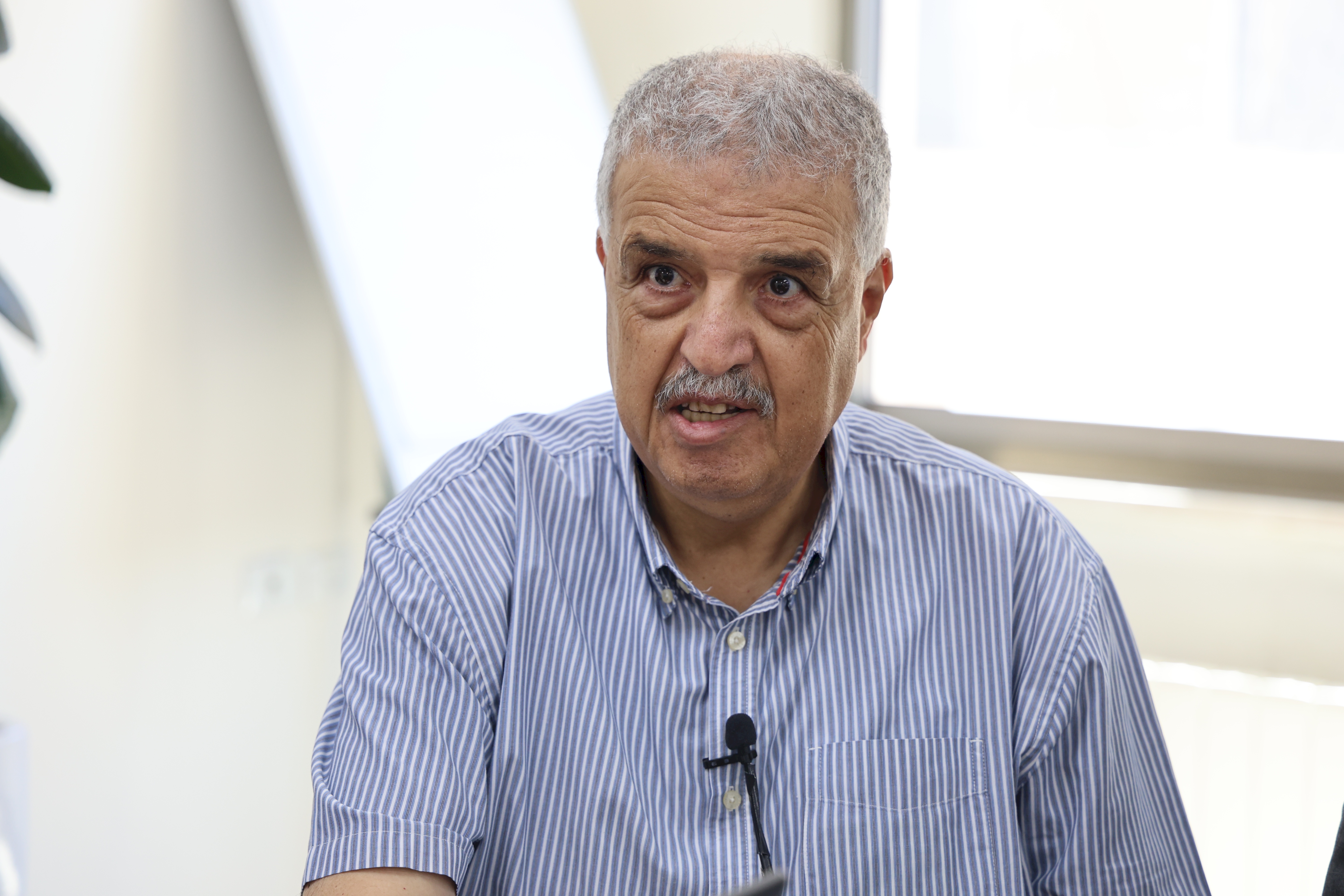
Report author Kayed Tanbour presented the report’s main findings. The report was based on a review of legislation, regulations, and official instructions, as well as interviews with regulatory and government bodies, electricity distribution companies, entities working in renewable energy, and experts.
The report found that a relatively clear legislative and regulatory framework is in place governing licensing, grid connection, tariffs, fees, complaints mechanisms, and oversight. At the same time, it identified a need for greater transparency regarding the technical and economic bases used to calculate financial charges, improved disclosure of oversight data, stronger social accountability mechanisms, and a unified, comprehensive framework for managing conflicts of interest among the various entities involved in the sector.
The report explained that the debate over the fairness of charges associated with the net billing system is not simply about whether such charges should exist. Rather, it concerns whether the basis used to determine their amounts can be verified, the extent to which they reflect actual or avoided costs, patterns of grid use, differences between household and investment-based generation, and the technical and economic impact of energy storage systems.
Adopt a Publicly Disclosed, Auditable Costing Methodology
The report stressed the need to move beyond merely justifying the imposition of fees and instead demonstrate that the amounts charged are fair. This would require adopting a publicly disclosed, auditable costing methodology, disclosing the assumptions and methods used to calculate fees, and periodically reassessing them using actual, up-to-date data on grid costs and the benefits generated by renewable energy producers.
It recommended continuing to develop the regulatory framework governing relations between electricity distribution companies and renewable energy producers, periodically reviewing the net billing instructions, and adopting a unified conflict-of-interest management framework that requires disclosure of interests and recusal from decision-making where a potential conflict exists.
Unified Electronic Platform for Licensing and Grid Connection
The report also recommended simplifying procedures, standardizing the guidelines used by distribution companies, and developing a unified electronic platform that would allow investors and consumers to track licensing and grid-connection applications and follow their progress.
It called for stronger oversight and accountability through the regular publication of data on the performance of distribution companies, including service quality, grid-connection applications, complaints and their processing times, acceptance and rejection rates, and the reasons for those decisions. It also recommended developing an integrated electronic system for complaints and objections linking electricity distribution companies with the Palestinian Electricity Regulatory Council (PERC).
With regard to consumer protection, the report recommended establishing a clear oversight framework for investment companies and service providers that install renewable energy systems. The framework should include accreditation and licensing requirements, safeguards for the quality of installation work, disclosure of costs and technical specifications, and clear mechanisms for resolving disputes and providing compensation.
Call for a National Dialogue Platform
The report stressed the need to establish a national dialogue platform bringing together regulatory and government bodies, electricity companies, the private sector, consumer protection associations, and civil society organizations to follow up on the implementation of the recommendations and support regulatory reforms.
It also called for the use of evidence-based advocacy tools, policy papers, public consultation sessions, and periodic reports to help build a more transparent and equitable system and support a sustainable transition to renewable energy in Palestine.
Palestinian Electricity Regulatory Council: Sector Reports Are Publicly Available
Qais Samara, Director of the Licensing Department at the Palestinian Electricity Regulatory Council (PERC), said the Council has regularly published its annual reports and sector performance reports for more than 10 years and that these are publicly available, including information on licensing procedures and requirements. He added that the Council is developing an electronic platform to automate licensing procedures and improve access to information.
Samara explained that the net metering system has been periodically reviewed and developed, with the distinctions between investment and self-consumption clarified over time, until the system was issued in its approved form in 2025 with the agreement of the relevant stakeholders and published in the Official Gazette.
He added that the sector’s technical and financial reports take into account differences among investment and consumption models and their implications for tariffs and the equitable distribution of benefits among subscribers, including those who do not have renewable energy systems. He emphasized that the Council’s role also includes listening to citizens and relevant stakeholders through consultation sessions that contribute to improving regulation of the sector.

PENRA: Reviewing Legislation and Preparing a New Incentive Package
Nidal Abu Al-Rub, Director of the Research, Studies and Exploration Department at the Palestinian Energy and Natural Resources Authority (PENRA), stressed the need to distinguish between PENRA’s role in developing public policy and legislation and the Palestinian Electricity Regulatory Council’s role in regulating the sector.
He said PENRA has been reviewing the legislation governing the energy sector for approximately a year, including the Renewable Energy and Energy Efficiency Law, with the aim of redrafting the relevant legislation within a unified legal framework before submitting it to the Council of Ministers.
He added that PENRA is also preparing a new package of incentives to encourage investment in renewable energy, which is expected to be submitted to the Council of Ministers soon.
Regarding the net billing system, Abu Al-Rub explained that the system examined by the study underwent an extensive review and discussions that prompted the government to suspend it and establish a national committee to study it, with representatives from the public and private sectors and consumer protection. He noted that the committee developed proposals for a new system and that the resulting proposals are now before the Prime Minister.

Consumer Protection: Improved Complaint Handling
Salah Haniyeh, Chairman of the Consumer Protection Association, said governance standards in the electricity and renewable energy sector have improved noticeably, particularly in the receipt and follow-up of citizens’ complaints. He noted that the Council now handles complaints that meet the applicable criteria more effectively and within defined timeframes.
Haniyeh said the current version of the net billing system provides a degree of fairness, particularly in the way surplus energy production is calculated, while stressing the importance of maintaining a balance between consumer protection and the sustainability of electricity distribution companies.
Need to Safeguard Grid Sustainability and Regulate Companies Operating in the Sector
Samah Dasht, Director of the Technology Department at the Jerusalem District Electricity Company (JDECO), explained that distribution companies bear costs and other burdens associated with connecting renewable energy systems to the grid, in addition to responsibilities related to energy security and grid sustainability.
She stressed that the expansion of renewable energy must take place within clear technical and regulatory plans and controls, with legislation and policies reviewed periodically in light of rapid technological developments. She also emphasized the importance of monitoring the impact of net metering and net billing systems on the various stakeholders and identifying who benefits and who is adversely affected.
Dasht also stressed the need to regulate the renewable energy market and the companies installing such systems to ensure compliance with technical standards and consumer protection requirements. She noted that achieving the objectives of national renewable energy plans requires alignment among the government, regulators, distribution companies, and investors.
Importance of Incorporating Technical Considerations into Fairness Assessments
Basel Abdel Jawad, Technical Director at Palestinian Electricity Transmission Ltd. (PETL), said that assessing fairness and governance in the renewable energy sector requires incorporating technical considerations into the study, since the fairness of any system cannot be assessed independently of its technical effects on the various stakeholders and the electricity grid.
He criticized the imposition of fees on renewable energy investments, arguing that they could discourage citizens from investing in such systems, particularly since consumers bear both the investment costs and the technical risks within their own homes.
He stressed the need to align renewable energy regulation with the stated national target of increasing the share of renewable energy by 2030 and to view electricity as a strategic commodity linked to energy security. This, he said, would help strike a balance between encouraging investment, protecting the grid, and ensuring the sustainability of electricity services.

Calls to Study the Economic Impact and Regulate Energy Storage
Bashar Soudah, a representative of the Northern Electricity Distribution Company (NEDCO), said electricity tariffs are set in cooperation with the Palestinian Electricity Regulatory Council and submitted to the Council of Ministers for approval, noting that distribution companies incur costs and make investments associated with providing electricity services.
He called for broadening the scope of the study to include the full range of relevant stakeholders, particularly contractors and companies implementing renewable energy projects. He also called for examining the economic impact of the net metering system on distribution companies and subscribers, while taking into account differences among the household, commercial, industrial, and agricultural sectors when developing policies and setting fees.
Soudah also stressed the need to regulate energy storage as renewable energy projects expand, expedite resolution of the transitional phase associated with the suspension of the net billing system, and establish a unified guidance manual setting out procedures for distribution companies. He said this would reduce regulatory gaps and inconsistencies and encourage investment in solar energy.

New Incentives for Renewable Energy Projects
Dima Qandah, representing the Investment Promotion and Industrial Estate Agency (IPIEA), said the Agency has focused on regulating incentives provided to renewable energy projects in the economic sector according to defined rules and criteria, with relevant information published in the Official Gazette to strengthen transparency and disclosure.
She added that, in cooperation with PENRA, work is underway on a new incentive package for renewable energy projects, including net billing and direct-sale projects. The package is expected to be announced once the approval process is complete. She noted that the proposed incentives will also cover power-generation projects incorporating storage systems of varying proportions and capacities depending on the nature of each project.
Regarding conflicts of interest, Qandah said that several relevant bodies participate in preparing and granting incentives, including the Investment Promotion and Industrial Estate Agency, PENRA, the Ministry of Finance, the Ministry of National Economy, the Palestinian Electricity Regulatory Council, and the Agency’s Board of Directors. This allows potential gaps or issues to be discussed and referred to the competent authorities or experts when necessary.

Local Government: Review the Regulation Six Months After Implementation Begins
Ghadeer Al-Ahmad, representing the Ministry of Local Government, said the Ministry supports having a regulation or law governing the renewable energy sector, noting that the absence of a governing framework could lead to disorder affecting all stakeholders, including local authorities.
She explained that the Ministry participated in the various committees that discussed the regulation alongside the competent authorities and sought to achieve the greatest possible balance among the interests of the various stakeholders.
Al-Ahmad stressed that, if approved, the regulation should undergo a comprehensive review six months after implementation begins. The review, she said, should be based on actual data and results reflecting implementation in practice rather than on prior assumptions.
Rana Hamayel of the General Secretariat of the Council of Ministers said that approving the general policy for renewable energy management, together with the new net billing regulation, is among the government’s priorities. She noted that the new regulation is currently before the Council of Ministers and is expected to be approved soon.