AMAN Calls for Updated Legislation and Procedural Guidelines to Ensure Fair Application of Planning and Building Regulations
During a discussion of a report on integrity, transparency and accountability in the work of the Higher Planning Council
Ramallah - The Coalition for Integrity and Accountability (AMAN) held a discussion session on a report examining the state of integrity, transparency, and accountability in the work of the Higher Planning Council. The session aimed to assess the legal, institutional, and procedural framework governing the Council’s work, identify key gaps and potential corruption risks, and develop recommendations to strengthen integrity and good governance in its operations.
AMAN Executive Director Issam Haj Hussein opened the session, explaining that the report was prepared as part of civil society’s contribution to supporting implementation of the government’s reform agenda by providing observations and recommendations aimed at improving performance and the quality of public services.
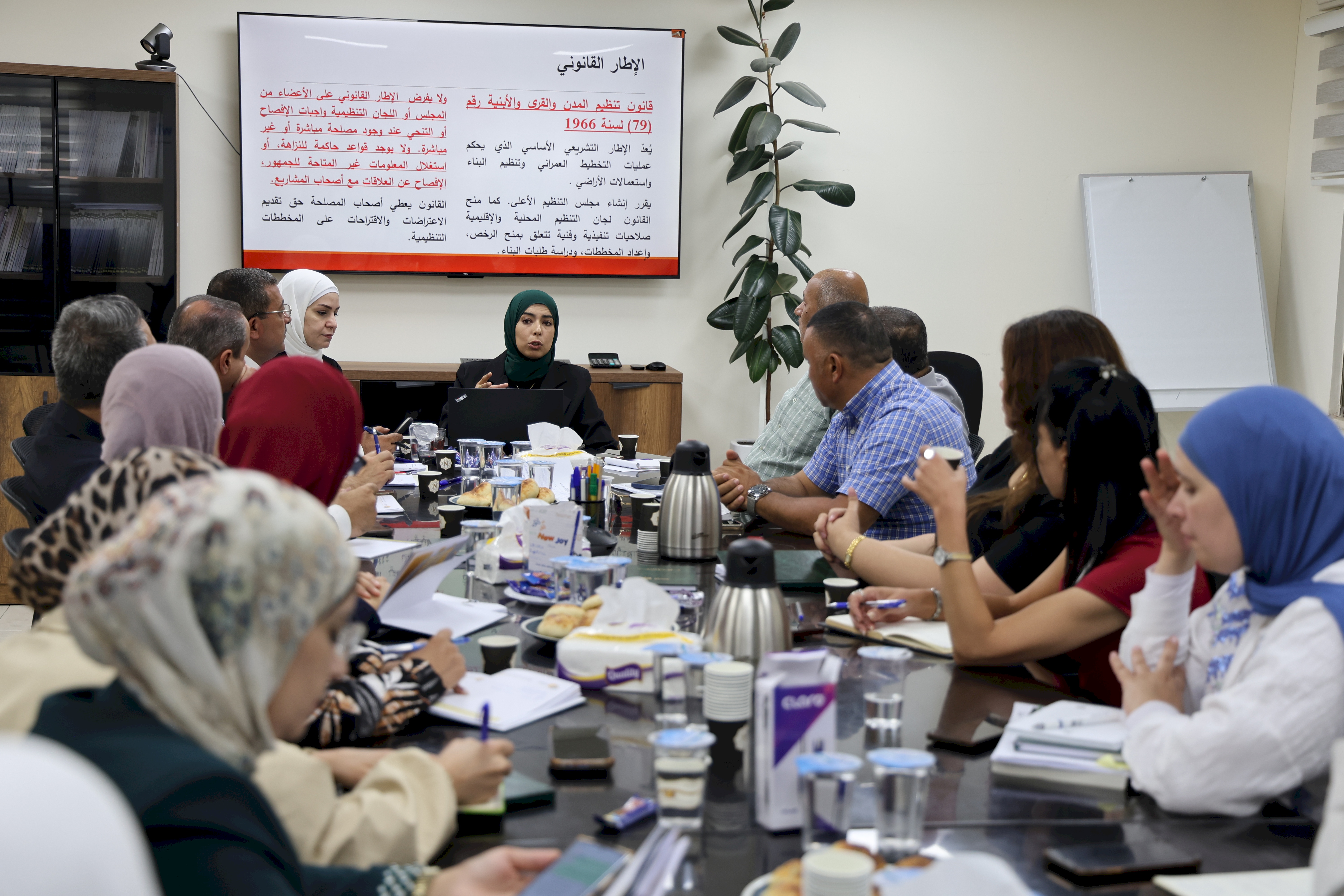
Researcher Ikhlas Tamliyeh, who prepared the report for AMAN, presented its key findings, conclusions, and recommendations. She noted that the Higher Planning Council is the highest planning authority responsible for spatial and urban planning and land-use regulation in Palestine. Its decisions have direct implications for individual rights, spatial justice, the allocation of land uses, services, and infrastructure, as well as for the environment, agriculture, heritage, the economy, and patterns of urban development.
The report found that the legal framework governing the Council’s work, primarily the Planning of Cities, Villages and Buildings Law No. 79 of 1966, as amended, contains extensive provisions regulating planning procedures and the allocation of powers. However, it does not adequately establish an integrated framework for integrity, transparency, and accountability as distinct governing principles.
The report also noted that the Association of Palestinian Local Authorities is not represented on the Council, even though local authorities are among the entities most directly involved in its decisions and their implementation. It therefore called for appropriate mechanisms to strengthen local representation on the Council while taking into account safeguards against conflicts of interest.
On transparency, the report found that the Council complies with the formal procedures for issuing its decisions and circulating them to the relevant parties. At the same time, however, some transactions lack sufficiently clear written timeframes and standardized procedures, which may lead to varying processing times and leave room for individual discretion.
With regard to oversight, the report identified shortages of technical and oversight staff, particularly building inspectors and inspection personnel in some directorates and regional committees. This may limit the ability to detect planning violations at an early stage. It also noted that a significant proportion of oversight activity is initiated in response to requests and applications submitted by citizens, while proactive field inspections remain limited.
The report stressed that early intervention and effective oversight are essential to safeguarding sustainable development and protecting the public interest. It warned that delays in addressing planning irregularities may allow their impacts to accumulate, increase the financial and institutional cost of correcting them, and, in some cases, create realities on the ground that are difficult to reverse.
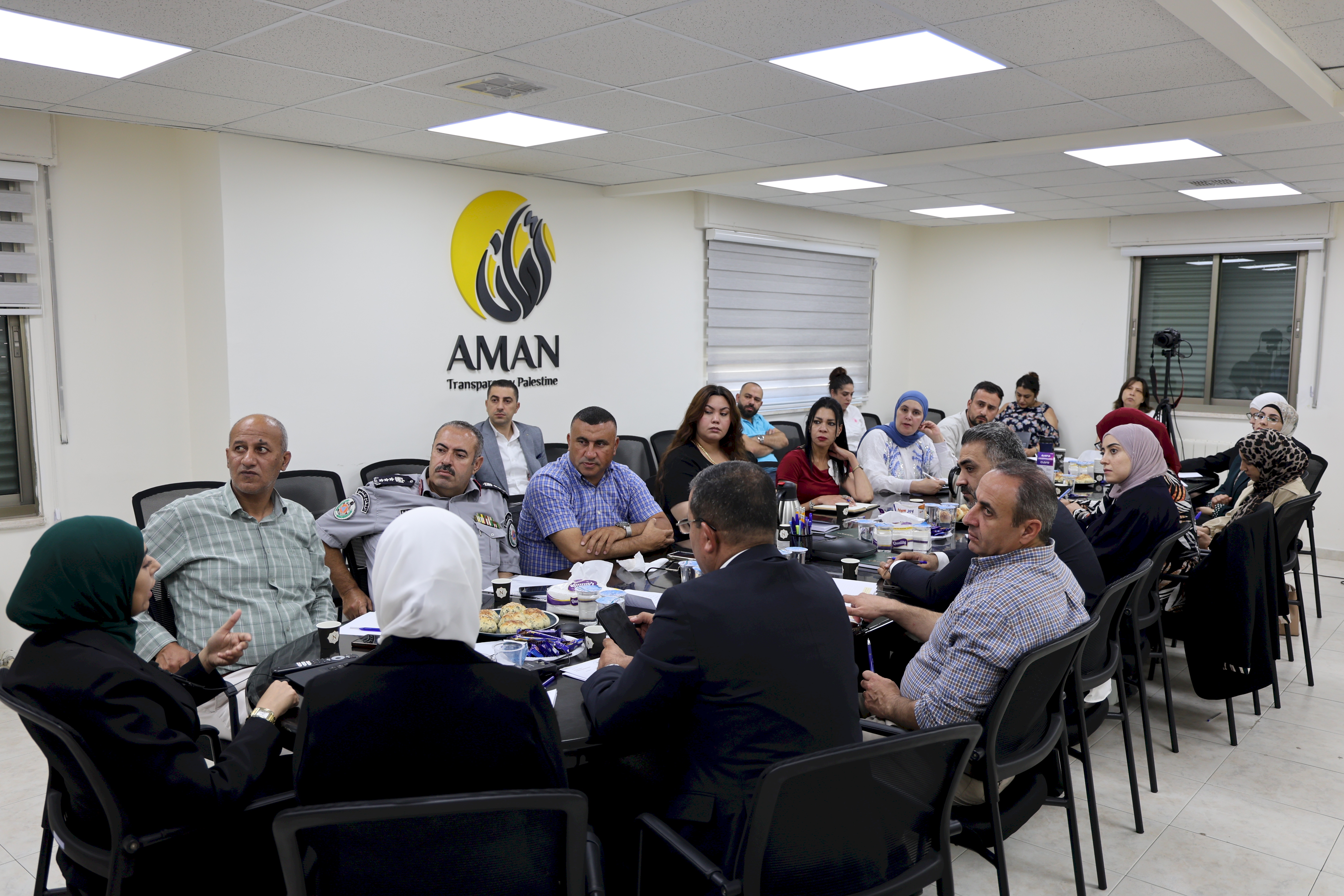
AMAN: Legislative and Institutional Framework Governing the Higher Planning Council Must Be Updated
The report recommended updating the legislative and institutional framework governing the Higher Planning Council to include explicit provisions and implementation mechanisms addressing integrity, transparency, and accountability. It also called for the Council Secretariat to conduct periodic corruption risk assessments as a preventive measure and to develop early-warning mechanisms for identifying potential risks.
It further recommended exploring mechanisms for representing local authorities on the Council, as well as developing a written conflict-of-interest policy and a specialized code of conduct for Council members and planning committees. These should regulate the disclosure of interests, recusal, the acceptance of gifts and benefits, and the confidentiality of information.
The report called for increasing the number of technical and oversight staff, adopting a proactive oversight approach based on regular field inspections, and making greater use of geographic information systems to identify and follow up on potential violations.
It also recommended greater disclosure of information relating to Council decisions, including the technical and legal reasoning behind those decisions to the extent permitted by law. In addition, it called for clearer information on the stages involved in reviewing applications and the timeframes required to process them, as well as further development of the Council’s electronic platform to enable more effective tracking of application status.
The report also stressed the need to develop procedural manuals setting out the stages, steps, and responsibilities involved in the planning process, including procedures related to granting planning facilitations and exemptions. It further recommended developing and implementing training programs on governance and mechanisms for preventing corruption risks.
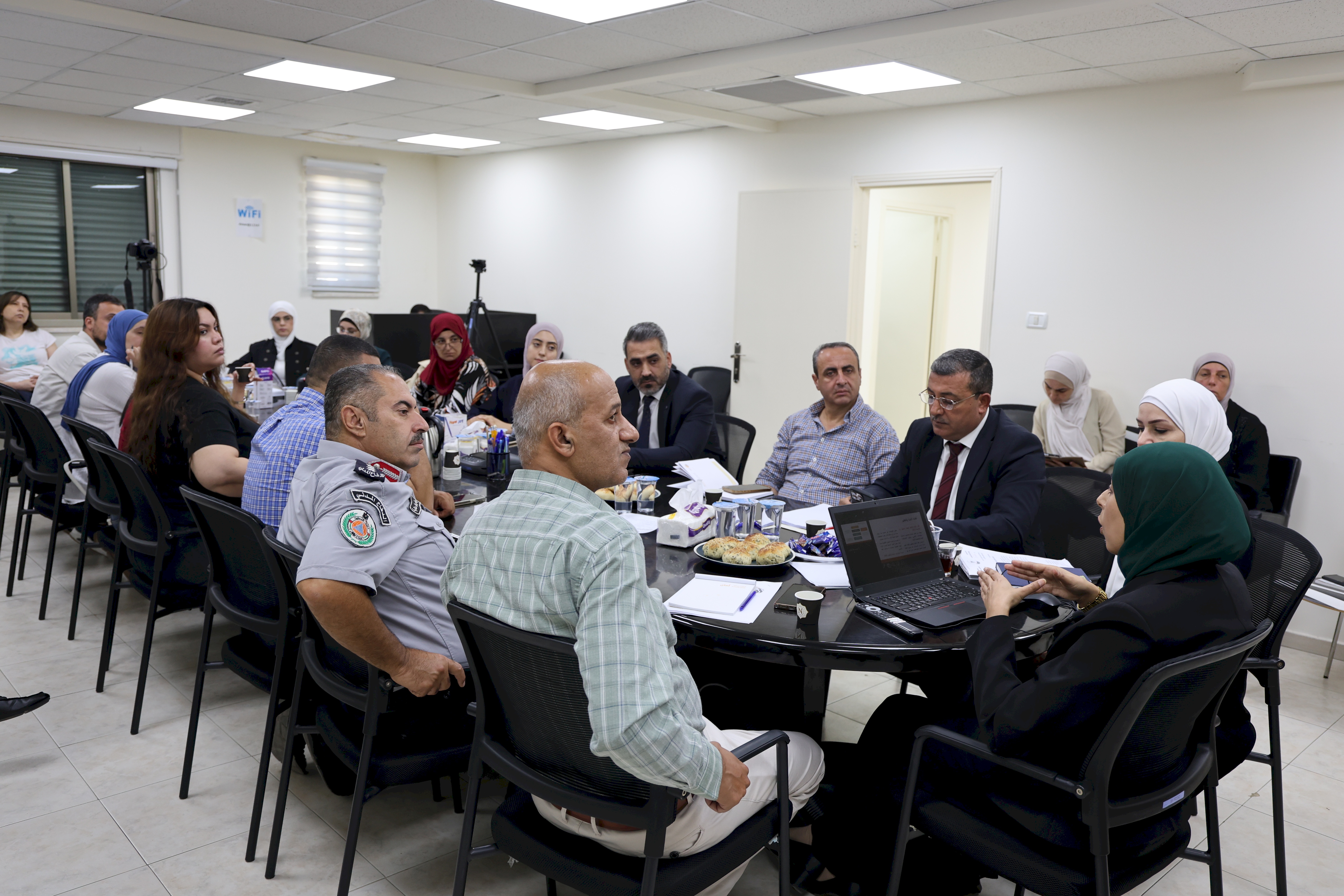
Ministry of Local Government Undersecretary: Occupation Measures on the Ground Require a Rapid Response
For his part, Ministry of Local Government Undersecretary Raed Muqbil said the Ministry views the report as an opportunity to assess the current situation and draw on its observations to improve the quality of services provided to citizens.
He noted that transparency cannot be measured in absolute terms, but rather depends on a range of procedures and varying levels of work, access to information, and participation. He praised the digital system used in the Higher Planning Council’s procedures, explaining that files are transferred electronically among engineering offices, relevant entities, technical committees, and ministries. All actions and files are logged in the system with the date and time, allowing applications to be tracked throughout the process and, according to Muqbil, reducing the possibility of manipulation.
Muqbil added that during the period covered by the file review, no “complaints” had been recorded regarding the Council’s work, which he said was an indicator that should be taken into account when assessing its performance.
At the same time, he noted that some issues may stem from the laws and procedures themselves rather than from the staff responsible for implementing them. He said that compliance with lengthy statutory timeframes may not always be compatible with current conditions and the rapid pace of changes and interventions affecting work in the Palestinian territories, calling for certain legal provisions to be amended where necessary.
On financial matters, Muqbil explained that the Higher Planning Council does not have a budget under the law and has not received any funding. He added that conflicts of interest are governed by the government-approved conflict-of-interest regulation applicable to public employees, in addition to the system of financial disclosure declarations. He expressed the Ministry’s readiness to consider any additional legal measures that could further strengthen safeguards in this area.
He stressed that the Ministry seeks to minimize any potential shortcomings through the procedures available to it, noting that the ultimate objective of planning and regulation is to maximize benefits for citizens while minimizing harm and risks.
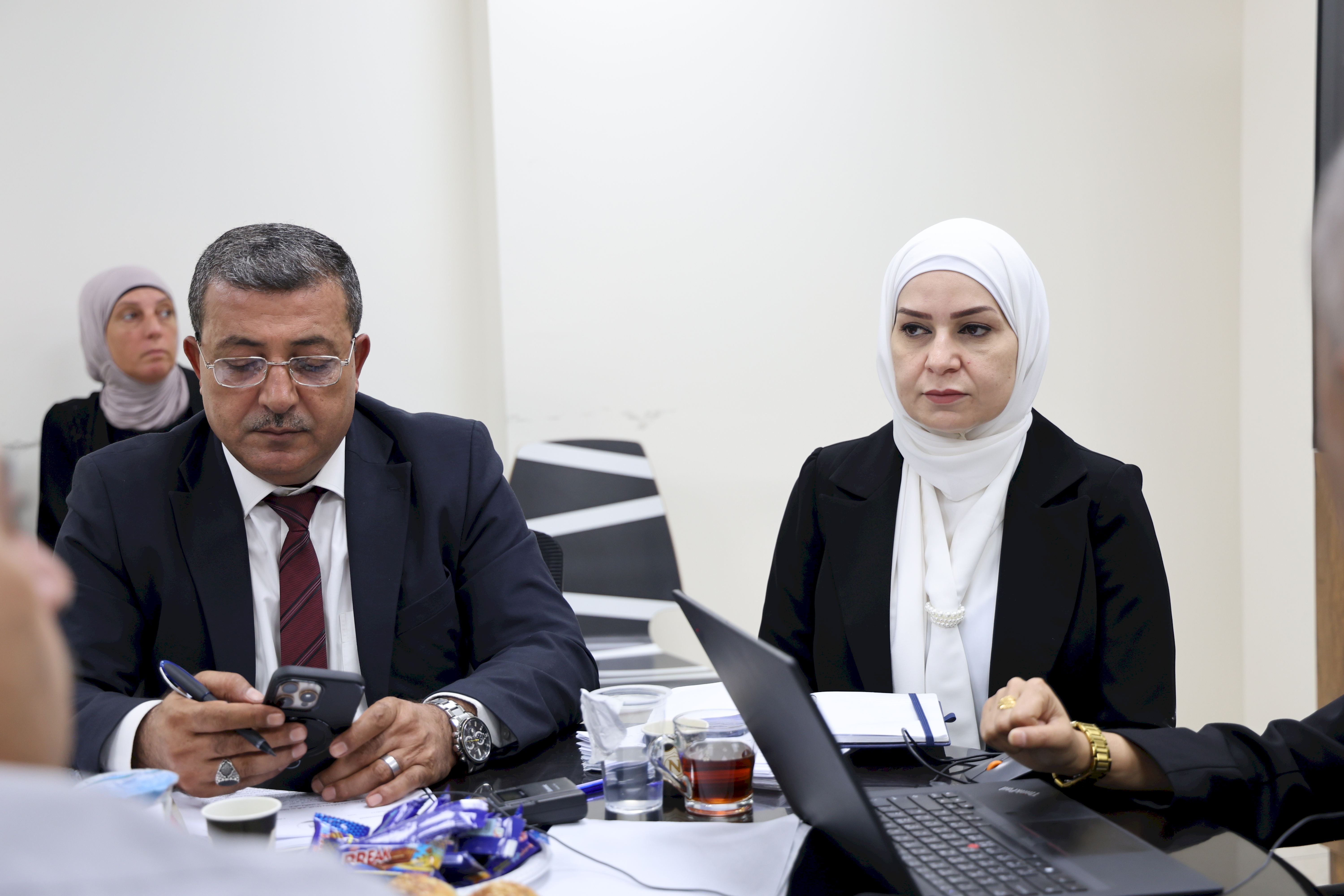
Association of Palestinian Local Authorities: Roles Must Be Reviewed and Transparency Strengthened
Ahood Inaya, Director of Policy and Planning at the Association of Palestinian Local Authorities, stressed the need to review the distribution of roles and responsibilities within the Higher Planning Council’s structure, particularly by clearly separating the role of the Council Secretariat from that of the General Directorate of Urban Planning to ensure clear responsibilities and prevent overlap. The organization’s official English name is the Association of Palestinian Local Authorities (APLA).
She noted that the Secretariat was originally responsible for coordinating and presenting files, rather than preparing draft technical opinions. She said that changes to the organizational structure have made it necessary to reassess these roles as part of the ongoing restructuring process at the Ministry of Local Government.
Inaya called for greater transparency by documenting the minutes of Council meetings, disclosing conflicts of interest, and providing detailed reasons for decisions. Disclosure, she stressed, should not be limited to announcing a decision, but should also include the technical grounds on which it was based.
She also highlighted a legal gap arising from the absence of a specified timeframe for reviewing objections to plans, which may leave some objections unresolved for extended periods. She called for this issue to be addressed through legislation.

Palestinian Land Authority: Standardized Criteria and Clear Procedural Guidelines Are Needed
Mohammad Tarawa, Deputy Director of the Oversight Unit at the Palestinian Land Authority, said that some of the observations raised in the report point to the need for legislative amendments rather than violations of existing laws. He stressed that ensuring compliance with legislation poses a significant challenge for Palestinian institutions under current conditions.
At the same time, he noted that several of the issues could be addressed administratively, including by strengthening inspection capacity, standardizing planning criteria across local authorities, and developing clear procedural guidelines to govern the work.
He also pointed out that the land settlement process has not been completed in all areas, creating difficulties in establishing clear ownership when land is planned and portions are allocated for roads. He stressed the importance of linking land settlement and planning maps to reduce overlaps and make procedures clearer.

Ministry of Public Works and Housing: Clear Timeframe Needed for Reviewing Objections
Shifaa Mashaqi, representing the Ministry of Public Works and Housing, stressed the need to establish a clear timeframe for reviewing objections to planning schemes, noting that this is one area where the existing regulatory framework needs to be further developed.
She also emphasized the importance of adopting a clear mechanism for disclosing conflicts of interest. Given the sensitive nature of some files and Council members’ access to them, she proposed that members submit a declaration at each meeting regarding the matters under consideration.
Dr. Shuaibi: Recommendations Aim to Address Gaps, Prevent Corruption Risks, and Improve Performance
Dr. Azmi Shuaibi, Advisor to AMAN’s Board of Directors, stressed that the report is not intended to provide a comprehensive assessment of institutional performance. Rather, it focuses on specific aspects of integrity, transparency, and accountability. He noted that these principles are becoming increasingly embedded in institutional work, but still require clear indicators, procedures, and implementation protocols.
Shuaibi called for stronger corruption risk management policies instead of limiting action to addressing violations after they occur. He explained that the recommendations are intended to address existing gaps, prevent future risks, and improve the quality of public services.