Boycotting and Non-Cooperation with the Sharia Judiciary Council
The Coalition for Integrity and Accountability (AMAN) Holds a Discussion Session on a Report on the Integrity System in the Work of the Sharia Judiciary
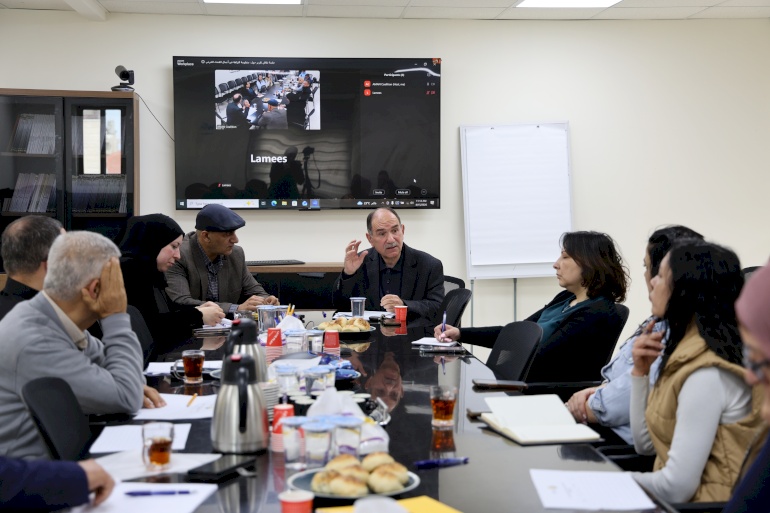
Ramallah – the Coalition for Integrity and Accountability (AMAN) held a discussion session on a draft report examining the integrity system in the work of the Sharia judiciary. The report examined the state of the Sharia judiciary through a comprehensive analysis of its legislative and institutional frameworks, as well as its systems of integrity, transparency, and accountability.
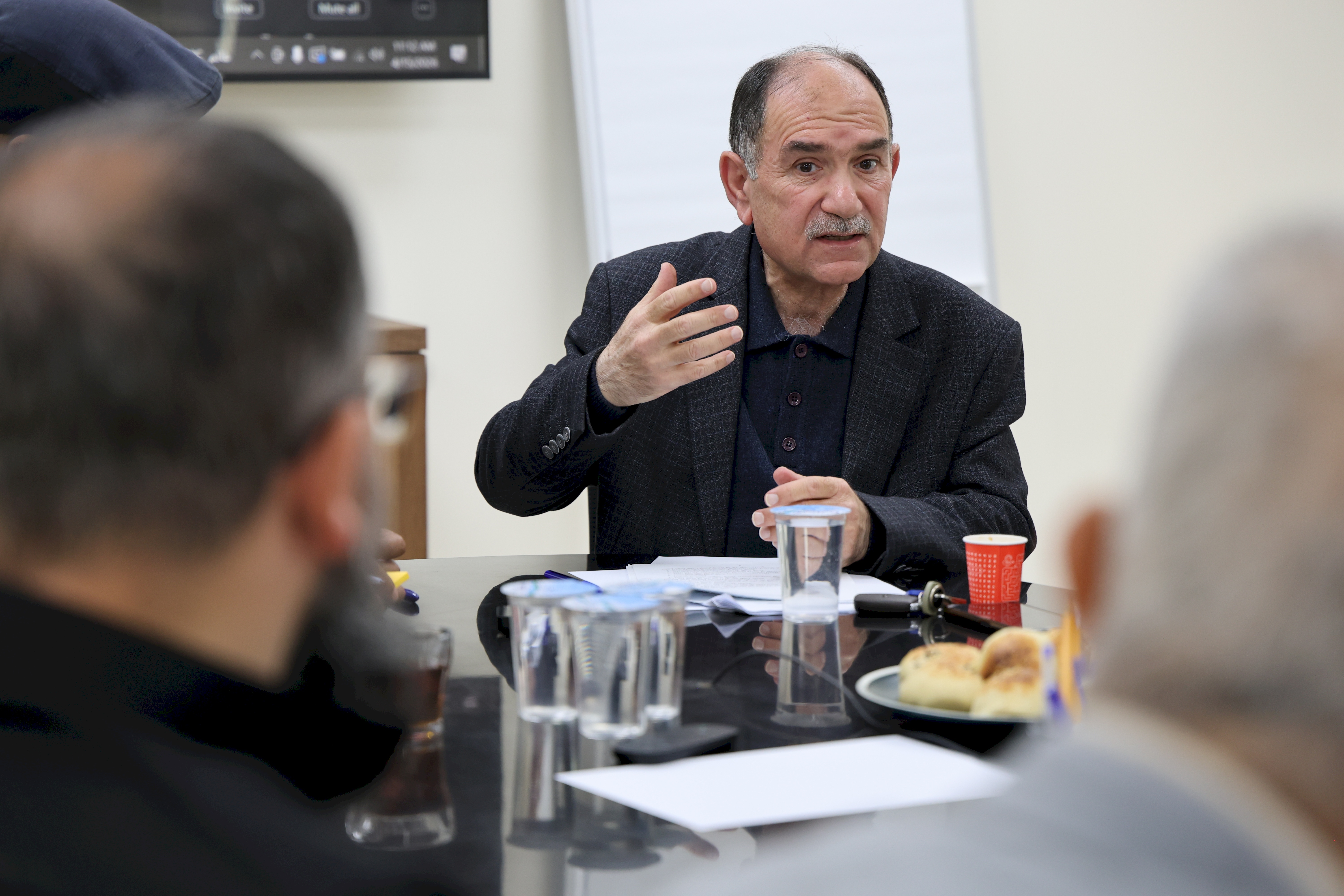
The Executive Director of the AMAN Coalition, Issam Haj Hussein, opened the session, noting that the discussion of the draft report is part of a series of periodic reports prepared by the Coalition within its contribution to reform efforts. These reports aim to provide decision-makers by offering recommendations aimed at improving overall performance and enhancing the quality of essential public services provided to citizens.

Haj Hussein explained that the Sharia Judiciary Council, which boycotted the session, did not cooperate in providing essential information for the preparation of the report, nor in reviewing its draft. He said this lack of cooperation reinforces AMAN’s continued calls for greater openness, as repeatedly emphasized by the Prime Minister, which has been positively reflected in relations with many public institutions. However, most institutions under the supervision of the Presidential Office remain the least open and least responsive to accountability.
Haj Hussein also stressed the importance of AMAN’s consistent position, which calls for the government to adopt a formal, approved, and publicly issued policy toward civil society organizations, with clear accountability mechanisms to ensure compliance by any party that fails to adhere to it. He also emphasized the importance of revitalizing general elections, including legislative elections, in order to strengthen their role in holding institutions accountable, particularly those whose governing structures are marked by a degree of ambiguity.
Key Gaps, Concentration of Powers, and Overlapping Roles
Researcher Aziz Kayed presented the main findings and recommendations during the session. The report concluded that Decree-Law No. (8) of 2021 contributed to regulating the work of the Sharia judiciary, but it also entrenched the subordination of the Chief Justice’s Office to the President, in a manner that contradicts the Basic Law and weakens the independence of the Sharia judiciary.
The report also noted that while provisions related to integrity and the prevention of conflicts of interest do exist, they are not supported by sufficient mechanisms to ensure their enforcement. It further highlighted the absence of binding requirements for the publication of reports and decisions, as well as the lack of clarity surrounding the issuance of bylaws and executive instructions. The report also considered the transfer of regulatory authority to the President constitutes an encroachment on the powers of the Council of Ministers.
It was also indicated in the report that the Sharia judiciary consists of the Office of the Chief Justice, the Sharia courts, and the Sharia Judiciary Council. However, it noted that the Chief Justice simultaneously holds multiple positions and powers, which contributes to the concentration of authority and weakens accountability.
Unclear Appointments, Documented Violations, and Weak Publication, Disclosure, and Transparency
The report also found that the appointment of the Chief Justice is carried out without clear standards or competitive procedures, which undermines guarantees of impartiality. It further identified administrative and financial irregularities related to recruitment, the work of arbitrators, the disbursement of allowances and expenses, and the absence of clear accounting systems, in addition to a lack of information on financial disclosure statements and conflict-of-interest policies.
The report noted limited transparency, as budgets, annual reports, and the organizational structure are not published. It also found that the website is poorly updated and lacks recent decisions and statements, which restricts citizens’ access to information.
Ineffective Accountability and Oversight Mechanisms
The report pointed to weak and inactive internal oversight units, as well as an unclear role for judicial inspection and a lack of information on complaint mechanisms and mechanisms for community accountability. It further indicated that transferring authority to the Presidency has weakened the effectiveness of accountability, given the absence of recently published reports or clear institutional oversight.
Recommendations for Legislative Reform, Enhanced Transparency, and Effective Community Accountability
The report recommended amending legislation to reintegrate the Sharia judiciary within the judicial authority and to limit the concentration of powers, in addition to adopting a law guaranteeing the right to access information. It also stressed the importance of publishing budgets, reports, and decisions, issuing bylaws and executive manuals, and activating the internal oversight unit.
The report further emphasized the need to strengthen community accountability and open channels of communication with citizens, as well as to clarify the mechanisms related to financial disclosure statements, judicial inspection, and the complaints system, in a way that contributes to enhancing integrity and strengthening public trust in the Sharia judiciary.
Different Remarks
Dr. Khaled El-Din Taleb, Head of the Department of Jurisprudence and Law at the Arab American University, said that the absence of Council representatives from the workshop reflects a state of shortcoming, stressing the need for a comprehensive review of the Sharia judiciary system and the legislation issued in the absence of a legislative council.
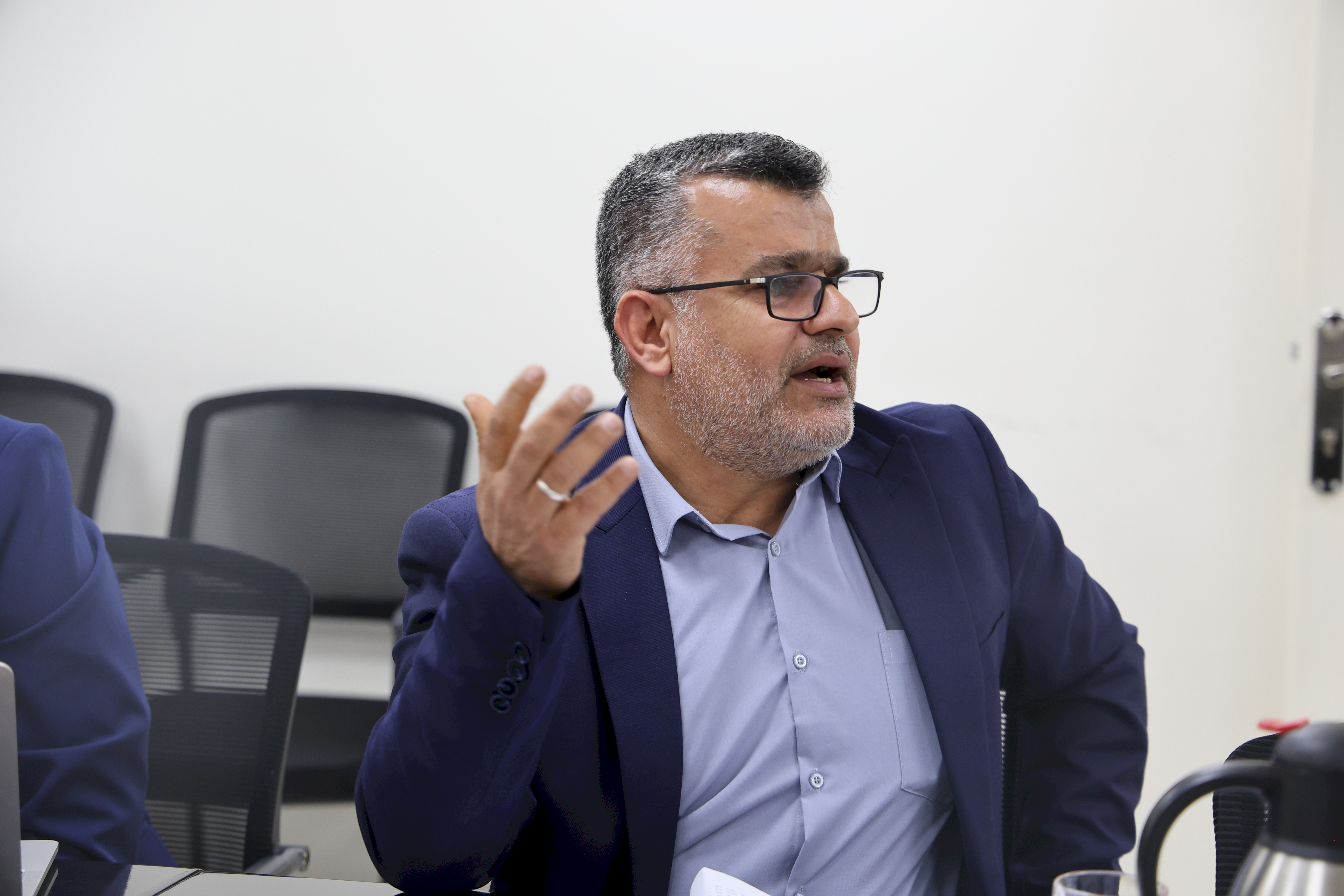
Taleb noted that general principles and updates are regularly shared with Sharia lawyers through social media platforms, while the official website is largely neglected.
Next, Bilal Al-Barghouti, Legal Advisor at the AMAN Coalition stressed that departing from the principle of the unity of the judiciary constitutes a fundamental constitutional violation, emphasizing that “there cannot be two judicial authorities.” He explained that concentrating authority in the hands of a single individual in the management of the judicial body contributes directly to institutional imbalance within the sector.

Al-Barghouti noted that the concept of accountability within the judiciary loses its substance when it is subordinated to the executive authority, adding that this also represents a clear constitutional violation. He further stated that the Basic Law does not provide for the judiciary’s subordination to the President; rather, it affirms its independence, with clearly defined frameworks governing its relationship with the government.
He warned that the continued dominance of the executive over the judiciary undermines the principle of separation of powers, stressing the need to establish a judicial council under a clear legal framework and defined institutional structure, ensuring that decision-making within this vital body is not monopolized.
Ouhood Marqatan from MIFTAH stated that the Supreme Judicial Council rejected a number of legislative amendments related to social justice issues, including amendments to the Personal Status Law, as well as the draft law on protection of the family from violence.
Marqatan added that the length of judicial proceedings, particularly in social cases, has a direct impact on women, leading to an increase in grievance cases. She pointed to the need to invest in family counselling units, noting that this could help reduce rising divorce cases, and emphasized the importance of developing these units to function as a preventive system that mitigates the escalation of family disputes.
Journalist Ansar Tmeizi remarked that the Sharia Judiciary Council does not publish its budget on its official website. She explained that the available financial data is presented in aggregate figures, without sufficient detail to allow citizens to understand expenditure allocations or assess the extent to which stated objectives are being achieved. She further noted that the limited scope of published information reduces the effectiveness of transparency and public accountability.

Shireen Al-Khatib from Mada Center said that there is a need to establish a clear and effective complaints mechanism, while ensuring that information is made available and published on the official website, in order to strengthen transparency principles and enable citizens to access information easily.
In turn, Dr. Huthaifa from the Fatwa Department stressed that the absence of the Council constitutes a major problem, noting that most of the questions raised are likely to remain unanswered in the absence of the Council. He questioned the procedures taken by the Council to rectify its situation, particularly in light of the observations included in the State Audit and Administrative Control Bureau report for 2025.
Dr. Azmi Al-Shuaibi, Advisor to the Board of Directors of the Coalition for Integrity and Accountability (AMAN) on anti-corruption affairs, concluded that the principle of governance based on the separation of powers provides for three authorities: legislative, executive, and judicial, affirming that this principle is based on a single judicial authority, not multiple judicial authorities. He explained that the legal texts clearly regulate the relationship between the authorities, while emphasizing the need for their separation, despite the existence of organizational linkages.

Al-Shuaibi pointed to the factors behind the expansion and growing size of judicial structures, noting that some of these arrangements have linked Sharia judiciary and fatwa institutions to the executive authority, raising concerns about independence and accountability. He added that annual reports issued by these bodies are submitted to the Presidency without adequate review or accountability, and stressed that the AMAN report does not assess the performance of judges.
Al-Shuaibi emphasized that strengthening integrity and combating corruption require the adoption of preventive strategies based on transparency, integrity in staff conduct, and institutional accountability, considering that the current institutional environment of the Sharia Judiciary Council may create opportunities for corruption.
He concluded by noting that State Audit reports have identified issues in the functioning of the Sharia Judiciary Council, while the institution is entirely absent from Presidential Office reports, raising questions about the level of oversight and accountability applied to it.