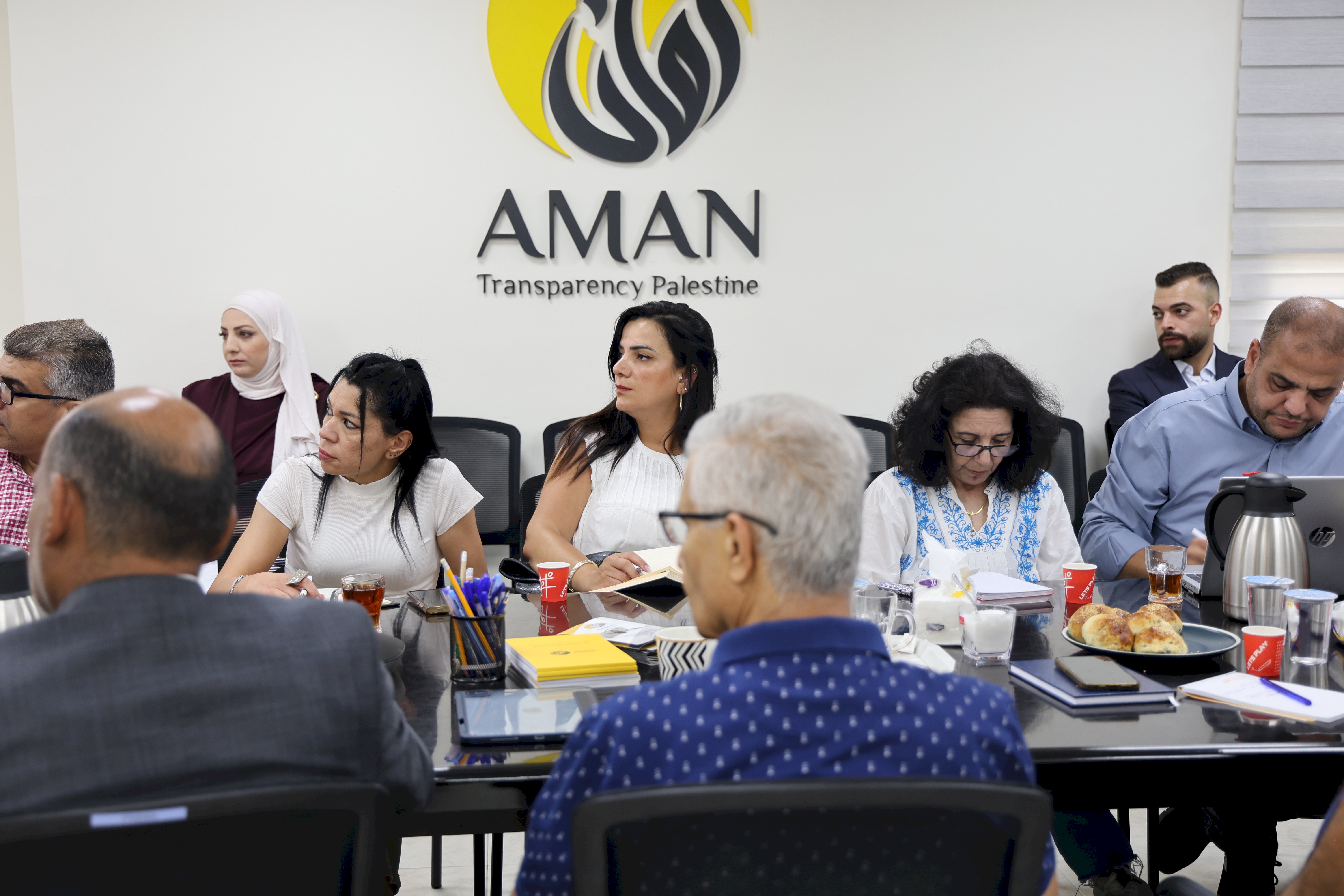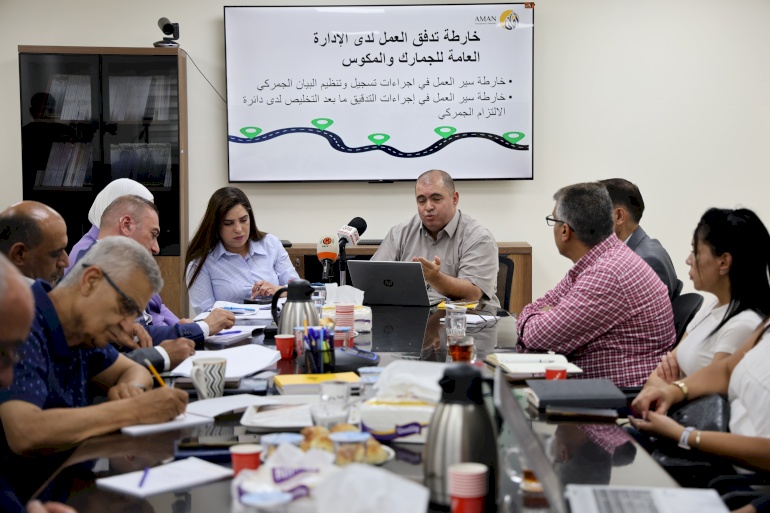
Ramallah - The Coalition for Accountability and Integrity (AMAN) held a session to discuss a study titled “Corruption Risk Management in the Work of the General Administration of Customs and Excise,” with the participation of representatives of official institutions, civil society organizations, researchers, and specialists in economic affairs.
The session was opened by AMAN’s Social Audit Coordinator, Lamees Farraj, who said the study aims to support the government’s reform efforts and strengthen governance within the General Administration of Customs and Excise, given its role as one of the most important instruments of trade policy and one of the largest sources of public revenue. She explained that the study adopted a methodology for identifying and analyzing corruption risks by tracing the path of administrative decisions and procedures, identifying potential opportunities for deviation, and assessing the likelihood of such risks occurring and the level of their impact. It then proposes measures to reduce these risks and improve work procedures, helping safeguard the financial institution and enhance its efficiency, in cooperation with the General Administration of Customs and Excise.
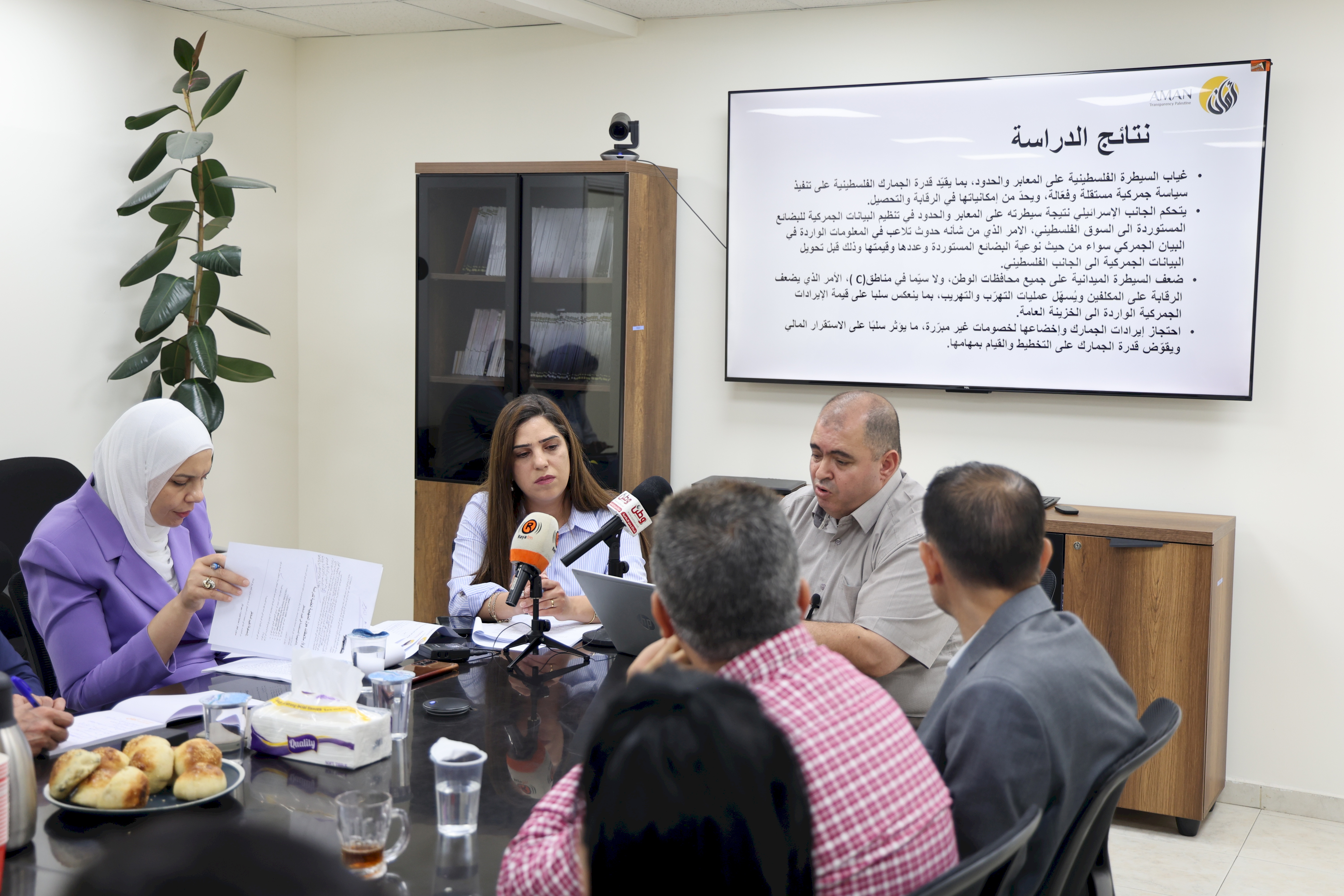
The study’s author, Dr. Abdul Rahim Taha, presented its key findings, explaining that it was prepared in cooperation with the General Administration of Customs and Excise with the aim of strengthening the institutional work environment by identifying and analyzing potential corruption risks in customs procedures and developing preventive measures to address them and enhance safeguards. He noted that the study underscored the central role of the General Administration of Customs and Excise in protecting public funds, with customs revenues reaching around NIS 4.6 billion in 2024, reflecting its importance as one of the main sources of public revenue.
The study focused on identifying corruption risks in customs and excise procedures by analyzing the paths of administrative decisions, assessing the likelihood of deviations from them, and proposing measures to reduce these risks and strengthen institutional integrity. The assessment was limited to two main tracks: the procedures for registering and preparing customs declarations, and post-clearance audit procedures for customs declarations within the Customs Compliance Department.
The study’s findings highlighted a number of positive aspects, most notably the electronic automation of the paths followed by customs declarations, the separation of staff powers in a way that prevents decision-making from being monopolized by a single employee, and the presence of supporting departments such as the Risk Department, the Valuation Department, and the Customs Compliance Department. Together, these measures strengthen internal control and help reduce opportunities for customs evasion.

Challenges and Risks
By contrast, the study identified a range of challenges and risks, most notably the continued absence of Palestinian control over crossings and borders, as well as weak control on the ground in some areas, particularly Area C; the withholding of customs revenues and the deductions imposed on them; outdated customs legislation that has not kept pace with international developments; delays in adjudicating customs cases; shortages of specialized staff and logistical resources; weak institutional integration and electronic connectivity between the Ministry of Finance and relevant ministries and government bodies; and the absence of a clear organizational structure and an effective system of incentives and promotions.
The study concluded with a set of recommendations, foremost among them updating customs legislation to align with Palestinian realities and international standards, updating the work procedures manual and making it available to the public to enhance transparency, developing the organizational structure of the General Administration of Customs and Excise, strengthening the separation of powers, supplying the administration with qualified staff, and providing specialized training for employees, particularly in anti-corruption legislation. The study also recommended upgrading information technology systems and using artificial intelligence technologies in customs work, completing the automation of procedures, strengthening electronic connectivity with relevant government bodies, adopting electronic archiving of data, and implementing a staff rotation system in customs offices to reduce the potential for conflicts of interest and strengthen institutional integrity.

The Ministry of Finance Has Direct Electronic Data Links with 13 Official Institutions
Fahmiya Hajji, Director of the General Administration of Customs and Excise, said that such studies aim to develop internal procedures and strengthen the oversight system in a way that enhances institutional safeguards and improves work efficiency. She noted that the study comes in parallel with a comprehensive review of customs procedures. Hajji added that the findings reflected the progress the department has made over the past 10 years through its efforts to close gaps and strengthen oversight tools. She explained that the department had previously cooperated with the Anti-Corruption Commission in preparing a study on corruption risks in the files of customs exemptions and vehicles, following a comprehensive review of procedures and with the participation of relevant stakeholders. She stressed that the Ministry of Finance had implemented all the recommendations included in that study, while the study on the tobacco file is still underway.
She explained that expanding automation and developing oversight systems help improve the quality of performance, noting that the ministry has completed full electronic connectivity with the Ministry of Transport, in addition to electronic links with 13 official institutions, including the Ministry of National Economy’s Consumer Protection Department, the Ministry of Telecommunications and Digital Economy, the Palestine Standards Institution, the Ministry of Agriculture, and other relevant bodies. This enables data exchange and the design of reports that serve the needs of these institutions, in line with the role of customs as the main gateway for goods entering Palestine.
Regarding the publication of customs valuation criteria, Hajji explained that the department prepares indicative criteria and updates them continuously for internal use, but does not publish them for taxpayers, on the basis that they are expected to comply with all applicable legal requirements and criteria. She also noted that customs work is affected by a range of external factors, foremost among them the limited Palestinian control over crossings and borders, which at times affects decision-making and the course of customs procedures.

Establishing a Palestinian Dry Port to Address Challenges
For his part, economic researcher Yusuf al-Zumar said the study showed that the greatest challenge facing customs work is the continued reliance of the Palestinian side on customs data and valuations received from the Israeli side. This leaves room for manipulation of the declared values of goods and affects public revenues. He stressed that establishing a Palestinian dry port is one of the most important strategic solutions, as it would enable the Palestinian side to verify goods directly and reduce opportunities for manipulation and corruption, thereby improving the efficiency of customs collection and protecting one of the most important sources of public revenue.
Unifying Customs Valuation Procedures Across Governorates
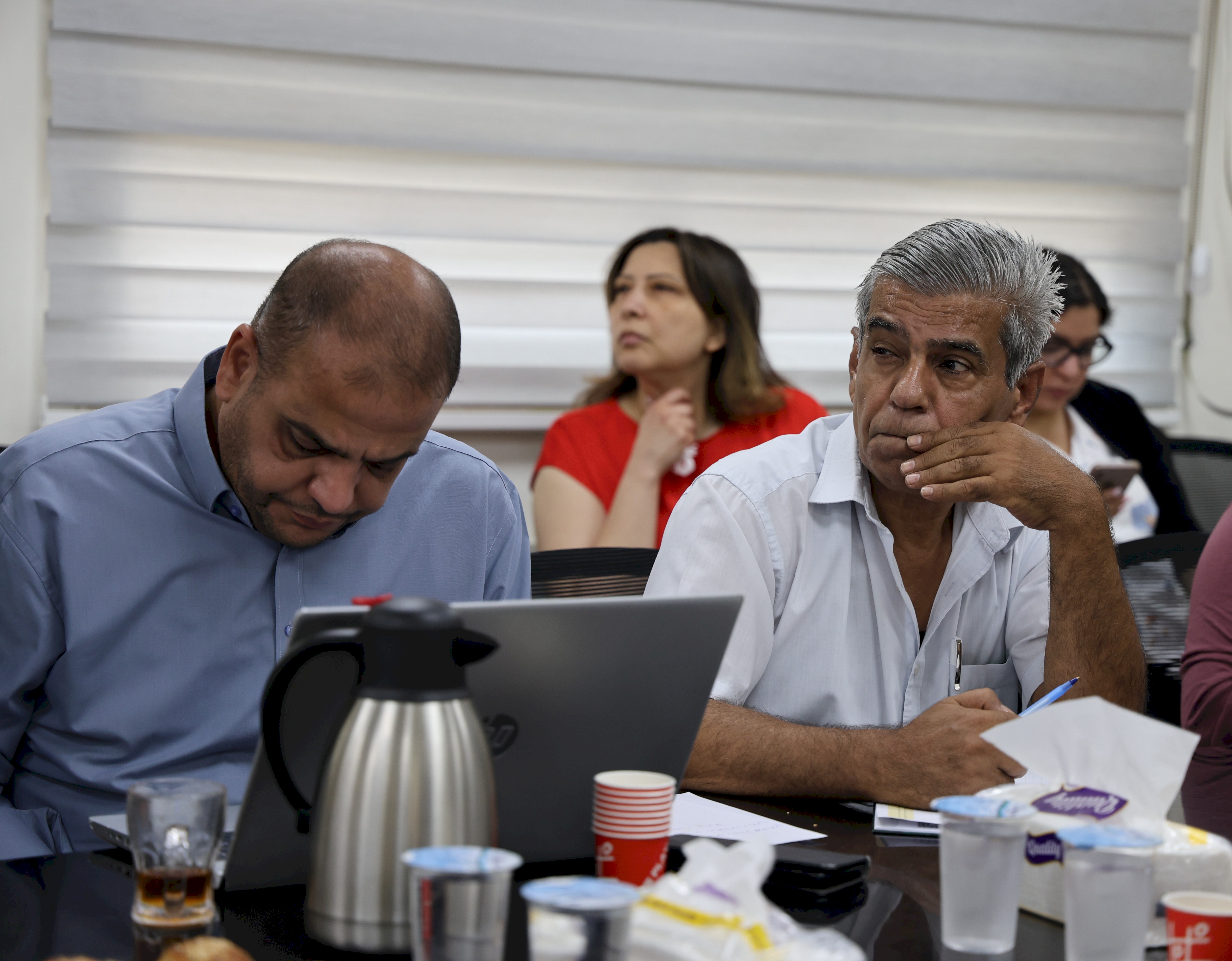
Baha Dweikat, representative of the Association of Certified Public Accountants, called for unifying customs valuation procedures across the different governorates, pointing to disparities in the mechanisms used to process taxpayers’ transactions, both in terms of the time required to complete them and the way they are handled. He also called for the approved customs valuation criteria to be published and circulated to auditors through the Ministry of Finance, arguing that clearly defined criteria and consistent application would help reduce disparities in valuations and promote fairness and transparency in dealings with taxpayers.

Customs’ Role in Protecting Local Products
For his part, Ibrahim Mahamid, representative of the Auditing Council, said that the role of customs is not limited to revenue collection, but also serves as a tool for protecting the national economy by curbing the flooding of the market with foreign products and strengthening the competitiveness of local products. He noted that protecting national production is one of the core objectives of customs policies, alongside revenue collection.
Adopting Post-Clearance Audits Based on Export Data Rather Than Commercial Invoices
Economic journalist Talaat Alawi said that customs work, by its nature, involves risks that require advanced oversight, noting that the Palestinian Customs Department has made significant progress in developing its procedures. He called for adopting post-clearance audits based on export data rather than commercial invoices, citing Jordan’s experience in establishing a customs intelligence unit to strengthen verification of customs value and reduce suspicions of corruption.
In response to the interventions, Hajji affirmed that traders have the right to object and file grievances against customs valuations when these are based on legal grounds and justifications. She explained that the Customs Department operates with limited human resources, despite handling around 15,000 commodities and 320,000 customs declarations worth nearly NIS 5 billion in 2025. She noted that customs data is transmitted electronically from the Israeli side to the Palestinian system, without being entered manually by staff, whose role is limited to requesting the documents and evidence needed from traders to complete the file. Hajji also confirmed that the department applies the post-clearance audit approach in practice and in line with best practices, whether through audits of selected shipments or comprehensive audits. At the close of the session, Hajji said the study represents a step toward documenting the corruption risk management procedures applied within the Customs and Excise Department and turning them into a written policy that strengthens institutional work.