"Unchecked Authority Fuels Corruption Risk"
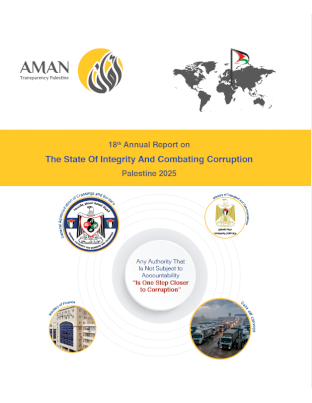
AMAN Coalition Issues 18th Annual Report on Integrity and Anti-Corruption in Palestine (2025)
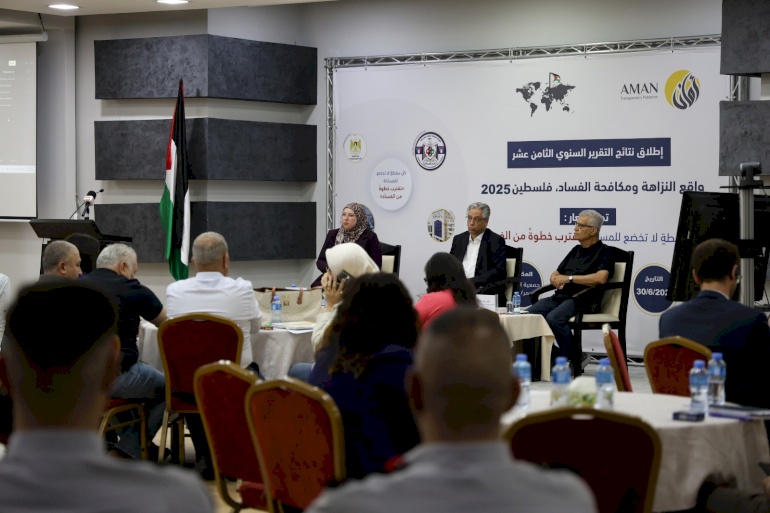
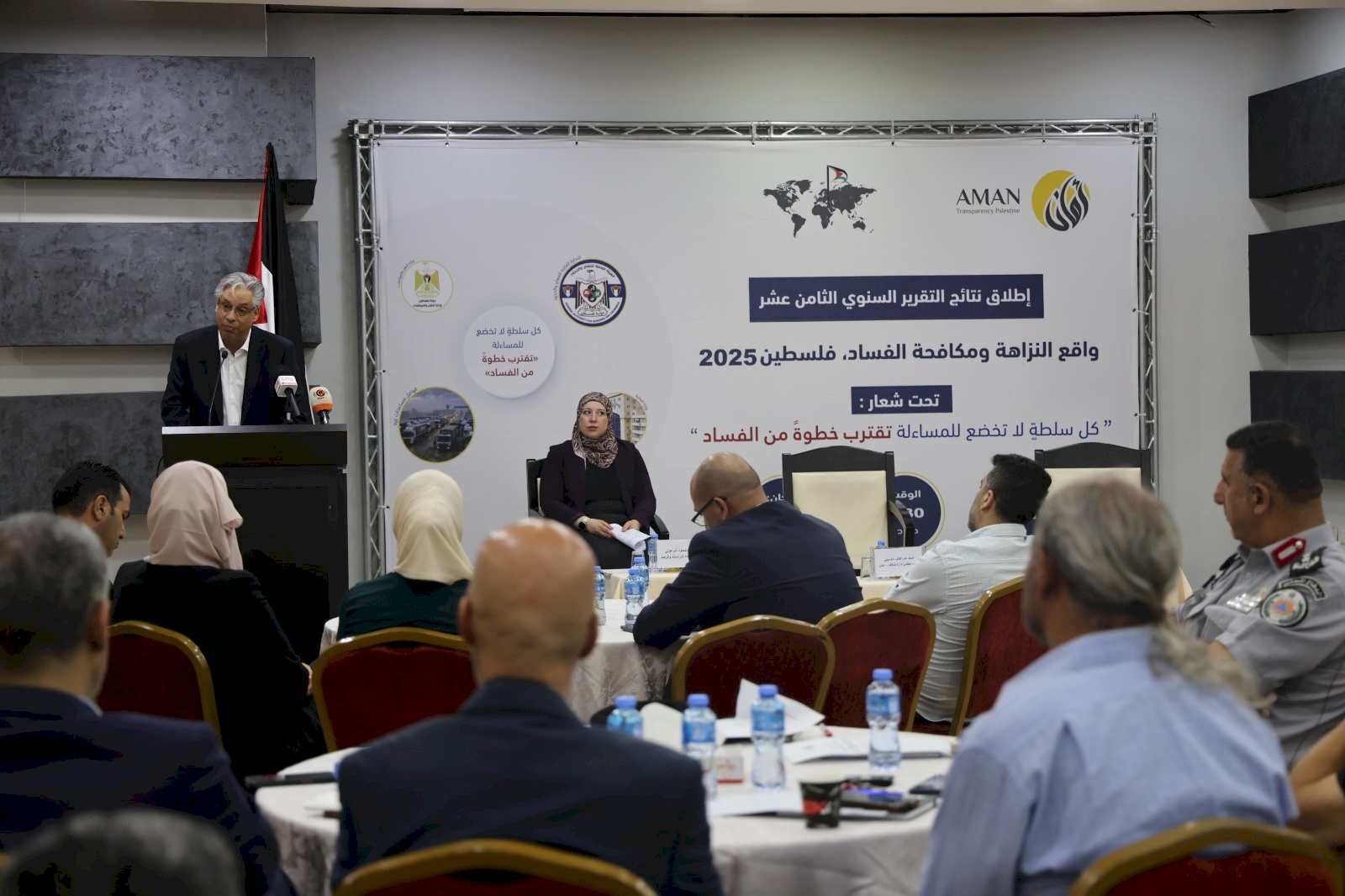
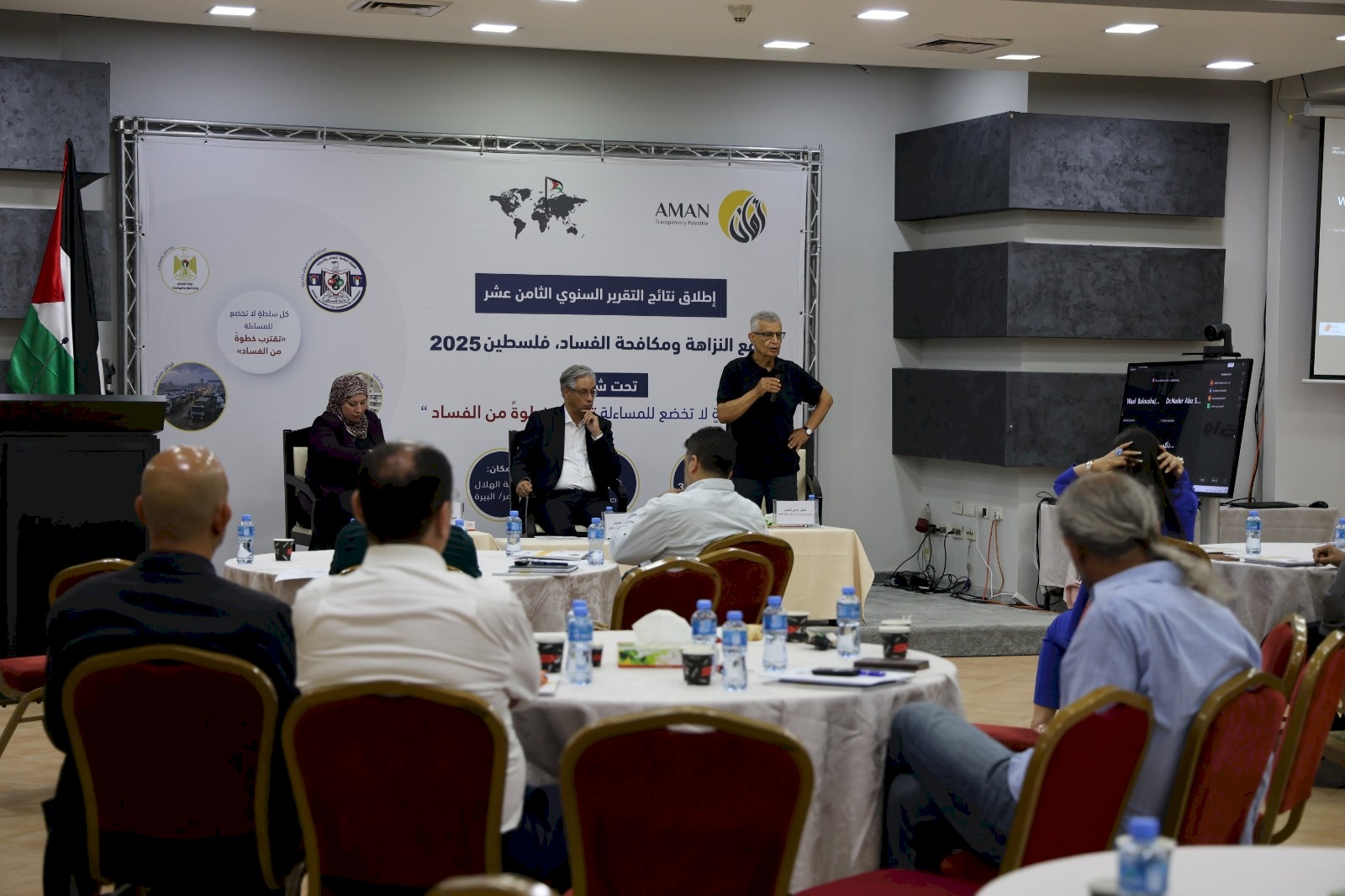
Ramallah/Gaza — The Coalition for Integrity and Accountability (AMAN) today released the findings of its 18th annual report, “The State of Integrity and Anti-Corruption in Palestine 2025,” during a conference held under the slogan: “Unchecked Authority Fuels Corruption Risks.” The report tracks key developments in the integrity and governance landscape over the past year, highlighting how the ongoing occupation, the war on Gaza, declining accountability, and the concentration of power have weakened oversight institutions and heightened corruption risks. It also puts forward a set of recommendations aimed at strengthening integrity systems and advancing the rule of law.
Unified Legal and Institutional Framework Across Palestinian Territories Seen as Key to Strengthening Integrity and Safeguarding National Decision-Making
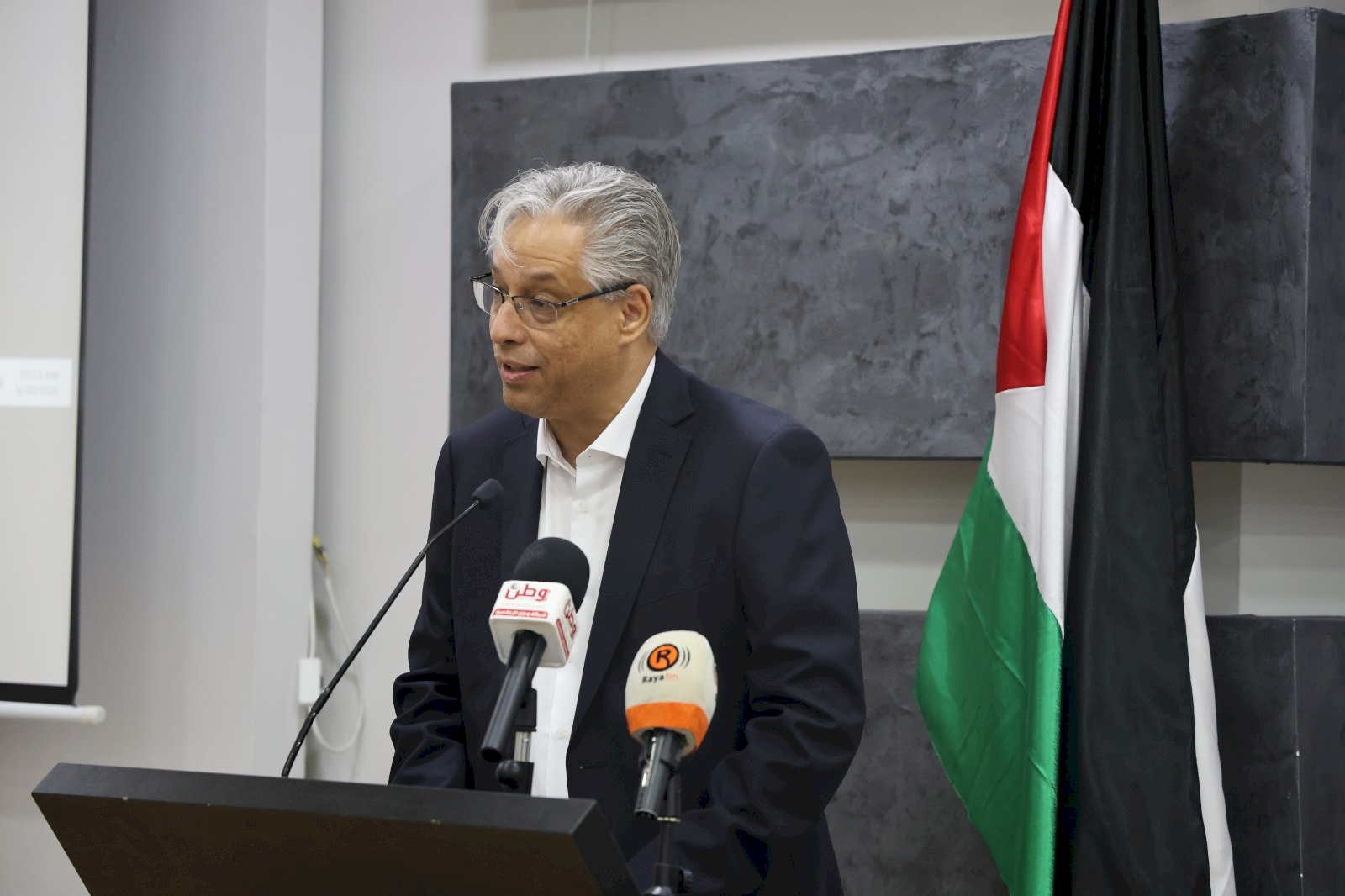
The conference opened with remarks by Abd al-Qader Al-Husseini, Chair of AMAN’s Board of Directors, who addressed the broader political environment, pointing to the escalation of settlement activity and Israeli measures aimed at consolidating control over Palestinian land. He noted that these developments have further worsened humanitarian and economic conditions, weakened governance and public administration institutions, and limited citizens’ access to their rights and essential services. Al-Husseini also highlighted how the ongoing war on Gaza, marked by widespread destruction, blockade, starvation, and restrictions on humanitarian aid, has triggered new forms of corruption driven by weak oversight and the disruption of law enforcement institutions. He stressed that the report comes at a critical juncture, serving as a test of Palestinians’ ability to manage the crisis at the national level. He underscored that maintaining unified legal and institutional frameworks between the West Bank and Gaza is essential for strengthening integrity, safeguarding the Palestinian national decision-making process, and reaffirming the Palestinian people’s right to self-determination amid growing international solidarity with their cause.
Fighting Corruption Is a Shared National Responsibility Requiring Genuine Political Will
Al-Husseini stressed that despite positive indicators in the government reform process and progress in implementing parts of the reform agenda, the current phase requires sustaining and strengthening these efforts to address mounting challenges. He also noted greater government openness toward civil society organizations, while emphasizing that such engagement still needs to be institutionalized and broadened to ensure meaningful participation in policymaking. He called on the government to actively engage with the report’s findings and translate its recommendations into concrete policies and measures that reinforce integrity and the rule of law, underscoring that combating corruption is a shared national responsibility. Al-Husseini further emphasized the importance of strengthening transparency and public dialogue amid the ongoing financial crisis caused by the withholding of clearance revenues. He highlighted the need to safeguard public resources, ensure their fair distribution, and complete functional reviews of public institutions—particularly non-ministerial bodies—while enhancing accountability mechanisms for their leadership. He also called for merit-based recruitment grounded in equal opportunity, as well as the establishment of a national committee to review the integrity of senior-level appointments, including ambassadors and heads of diplomatic missions. Among the key recommendations he highlighted were the adoption of a right-to-information law and the implementation of a national conflict-of-interest disclosure policy to prevent abuse of power, ensure a clear separation between public office and private business interests, and curb the misuse of influence for personal gain.
Occupation Fuels Systemic Corruption in the West Bank and Gaza
The report finds that the impact of Israeli occupation now extends beyond weakening Palestinian governance institutions, emerging as a key driver in creating an environment conducive to new forms of corruption in both the West Bank and Gaza. Through its control over crossings, restrictions on the movement of people and goods, obstruction of Palestinian institutional work, and erosion of oversight and accountability systems, the occupation has contributed to deepening corruption risks.
In Gaza, the report documents how Israel’s unilateral control and administration of border crossings has fostered conditions that enable monopolies, bribery, extortion, illicit fees, favoritism, embezzlement, and the misuse of funds, including the exploitation of humanitarian aid. The absence of effective Palestinian oversight over crossings has further undermined the integrity of humanitarian operations, allowing brokers and unregulated security companies to manipulate, divert, and resell aid amid a lack of transparency and accountability.
In the West Bank, the report highlights how Israeli policies—including control over the Allenby/King Hussein Bridge crossing, the withholding of clearance revenues, and restrictions on trade and movement—have contributed to an environment where bribery and exploitation of travelers and traders can occur. The report also documents a continued decline in public freedoms and human rights, noting that Palestine has been classified as “closed” in the global civil liberties index, alongside the Israeli authorities’ ban on 37 international humanitarian organizations and ongoing restrictions on civil society organizations in Gaza.
Centralization of Power Undermines Governance and Increases Corruption Risks
The report further underscores the continued concentration of powers within the presidency in the absence of a functioning Legislative Council. This has included the expansion of executive authority into core legislative functions and the issuance of key decisions and laws shaping the Palestinian political system. These measures have addressed issues such as constitutional arrangements, Palestinian National Council elections, amendments to local elections laws, political parties legislation, and the appointment of a vice president—often without sufficient national dialogue or public participation. According to the report, this trend undermines the principle of separation of powers, limits democratic oversight, and raises concerns about the future configuration of decision-making centers, potentially affecting equal access to political power and the strengthening of good governance.
Patronage and Politically Driven Appointments Persist Despite Reform Efforts
The report notes that despite improvements in procedures for appointing deput ministers and assistant deputy ministers, practices that contradict principles of integrity and meritocracy have continued. These include transferring some heads of public institutions and senior officials into special categories and granting them ministerial rank beyond established job classifications—reflecting the persistence of patronage, political loyalty-based appointments, and the use of privileges or sanctions at the expense of competence and the public interest.
The report also highlights the continued practice of allowing certain factions to nominate ambassadors in exchange for accepting other appointments. In 2025, a total of 40 ambassadors and one consul were appointed. It further documents the appointment of individuals with close ties to senior or former officials to diplomatic posts, raising concerns about equal opportunity and adherence to merit-based standards.
Additionally, the report records a notable expansion in appointments and promotions within senior civilian and security positions, with 84 appointments and 46 promotions, alongside 41 appointments and promotions for ambassadors and consuls. This trend comes despite government reform efforts aimed at reducing expenditures and restructuring the public sector. The report notes that approximately 30 percent of all promotions took place within the Palestinian Broadcasting Corporation alone.
Continued Requirement of Security Clearance for Access to Basic Rights and Services
The report documented the continued requirement to obtain security clearance as a condition for accessing certain fundamental rights and services in 2025. This requirement has resulted in some citizens being denied access, particularly in areas such as issuing passports for residents of the Gaza Strip, public sector employment, and obtaining professional licenses. The report notes that this practice undermines the principle of equality and restricts access to basic rights.
Civic Participation: Slight Improvement, but Continued Restrictions on Sensitive Issues
The report observed a slight improvement in the openness of official bodies to engage civil society organizations in reviewing and contributing to public policymaking during 2025. However, restrictions persist when it comes to involving them in sensitive matters, particularly financial and security-related policies.
The report also noted the publication of 20 draft laws on the legislative platform, considering this a positive step toward enhancing public participation in the development of legislation and public policy.
Only 10 Out of 42 Public Institutions Publish Annual Reports Online
According to the report, only 10 out of 42 public institutions have published their annual reports on their official websites. In contrast, several other institutions’ websites remain inactive or have not been updated for more than a decade.
The report further highlights that public institutions affiliated with the presidency demonstrate the lowest levels of transparency and accountability, increasing the risk of corruption within these bodies.
Need to Separate Public Office from Business Activity and Ensure Transparency of Beneficial Ownership
The report highlights the continued weak compliance with conflict-of-interest disclosure requirements, emphasizing the need to clearly separate public office from commercial activity—or, at a minimum, to subject any overlap to strict regulations that ensure transparency and prevent the misuse of public positions for private gain.
It further notes that the Companies Law does not include binding provisions requiring companies to disclose or regularly update information about their ultimate beneficial owners. Amendments to the law have limited Article 14 to publishing the names of authorized signatories only, without requiring disclosure of the company’s true ownership, undermining transparency.
Independence and Effectiveness of Oversight Institutions
The report documents ongoing challenges to the independence and effectiveness of oversight and judicial bodies in Palestine, citing their institutional dependence on the executive branch and the continued absence of a functioning Legislative Council. This concentration of authority—including the power to appoint, dismiss, or extend the tenure of heads of oversight bodies—limits their ability to hold decision-makers accountable and weakens their institutional independence.
While the Anti-Corruption Commission has made efforts to follow up on complaints and refer cases to the prosecution, the report warns that continued consultation with the presidency in cases involving influential figures opens the door to political pressure, potentially compromising the Commission’s independence.
Regarding the Public Prosecution, the report describes its performance in 2025 as weak, due to the absence of a dedicated governing law and the continued subjection of appointments to executive authority. This has affected its ability to pursue corruption cases—particularly sensitive ones—along with a lack of effective oversight mechanisms over its decisions.
The report also documents the refusal of security agencies to enforce (50) final court rulings, particularly those involving detainee releases or reinstatement of employees. It further states that such failure undermines the rule of law, erodes public trust in the justice system, and weakens the principle that all authorities are subject to judicial authority.
Public Spending Controls: Reduced Government Working Hours Impact Service Quality
While the government succeeded in controlling public spending and adhering to the 2025 budget ceiling by reducing actual expenditures, the policy of shortening government working hours has negatively impacted the quality of essential services, particularly in health, education, and social protection.
This has contributed to shortages of medicines and disruptions in assistance to vulnerable populations. The report recommends adopting a more flexible approach to expenditure management that takes into account the specific needs of each sector and the nature of services provided.
The report also notes legislative measures to restructure the security sector, including early retirement for a number of officers to reduce the wage bill. However, it stresses that achieving a more significant fiscal impact requires expanding reform to include additional military ranks, given their financial weight within the payroll structure.
Political Conditioning in Local Elections Raises Human Rights Concerns
Amendments to the Local Elections Law introduced controversial provisions, including a requirement that candidates sign a declaration committing to the political program of the Palestine Liberation Organization (PLO), its international obligations, and internationally recognized resolutions.
Civil society and human rights organizations have expressed strong reservations, arguing that imposing such political conditions constitutes a violation of international human rights standards.
Administrative and Security Vacuum in Gaza
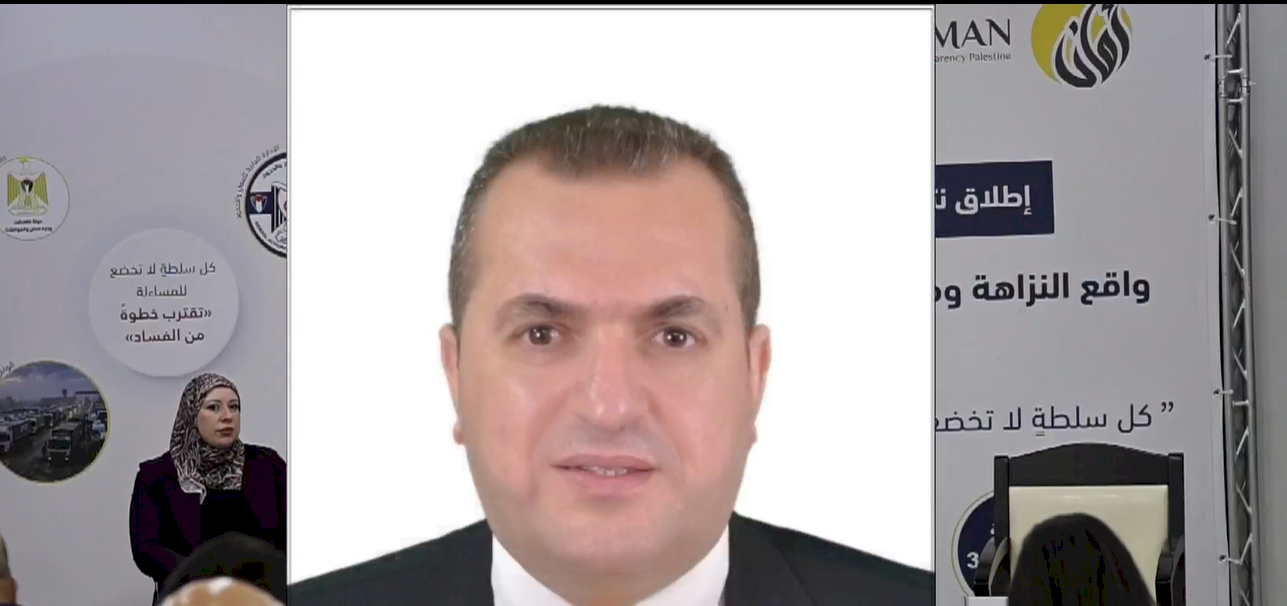
Dr. Nader Abu Sharkh, Deputy Chair of the AMAN Coalition’s Board in Gaza, stated that the Gaza Strip is experiencing a deep administrative and security vacuum as a result of the ongoing devastating war and systematic policies of occupation. These conditions have contributed to the dismantling of Palestinian institutional structures and weakened the role of the Palestinian Authority by targeting governance, justice, law enforcement, public services, and the banking sector, as well as restricting movement and border control.
He explained that the vacuum is reflected in the absence of a unified and effective governing system, as multiple actors manage services in a fragmented and uncoordinated manner without a single authority capable of ensuring order or managing public affairs comprehensively.
This has led to institutional confusion, overlapping mandates, and a lack of real accountability. The report warns that this environment has fueled “crisis-driven corruption,” where political and economic corruption intersect, manifesting in monopolies, black markets, extortion, and bribery amid scarce resources and deteriorating humanitarian conditions.
Restoring Unified Governance and Institutional Integrity
Abu Sharkh called for the establishment of a unified Palestinian administration in Gaza under the Palestinian Authority to prevent fragmentation or parallel governance structures. He emphasized the need to use the crisis as an entry point to strengthen national unity and advance state-building efforts.
He also recommended reinforcing national frameworks, strengthening both official and societal oversight, supporting professional unions and chambers of commerce, rebuilding essential service institutions based on integrity and accountability, and improving governance of aid and reconstruction through a temporary national coordination body involving all relevant stakeholders.
He further stressed the importance of adhering to transitional timelines and moving forward with preparations for general and presidential elections to enhance political participation and address existing challenges.
Warning Against Extrajudicial Settlements in Corruption Cases
The report warns of the dangers of resolving major corruption cases outside the legal framework, particularly when such practices become systematic. It stresses that effective accountability requires holding senior leadership responsible in cases of negligence or complicity.
It also criticizes the continued handling of corruption cases involving senior officials through informal consultations outside legal channels, noting that this undermines accountability and weakens anti-corruption efforts.
“Settling Corruption Cases Outside the Courts Fuels Impunity”
Dr. Azmi Shuaibi, Advisor to the AMAN Coalition’s Board, emphasized the importance of strengthening the independence of oversight institutions and ending their subordination to the executive branch. He warned that the absence of a Legislative Council and weak oversight over institutions affiliated with the presidency undermine accountability.
Shuaibi stressed that corruption cases must not be settled outside the judiciary, as doing so undermines the rule of law and increases impunity.
Referring to the case of former crossings authority head Nazmi Muhanna, he questioned the lack of oversight over the authority for nearly three decades. He also warned against repeating past attempts to settle high-profile case, such as those involving the cases of “Date Washing” (sale of Israeli dates under Palestinian label to benefit from preferential treatment) and “Al-Hayawiyah Company”, outside the courts.
He noted that attempts to access information about the beneficial owner of Al-Hayawiyah Company were rejected on legal grounds, as disclosure is limited to authorized signatories, undermining transparency and hindering efforts to identify true beneficiaries.
Shuaibi concluded that all corruption cases must be handled exclusively through the judiciary and called for stronger transparency and mandatory disclosure of beneficial ownership to reveal conflicts of interest and enhance oversight.
Conclusion: Accountability as a Safeguard Against Corruption
Shuaibi reiterated the report’s central message: “any unchecked authority moves one step closer to corruption.” He warned that continued concentration of power, rather than separation of powers, weakens governance and increases corruption risks.
He also noted that presidential issuance of regulations in areas that fall under government authority reflects imbalances in the distribution of powers, while the long-delayed Right to Information Law remains stalled despite repeated inclusion in reform agendas.
The report underscores that integrity, transparency, and accountability are essential pillars in combating corruption, especially amid the current challenges facing the Palestinian system. It calls for comprehensive political and institutional reform to restore balance between branches of government, ensure judicial independence, enhance transparency, and guarantee citizens’ rights to oversight and accountability as key safeguards for public funds and the national project.
Report Links: