The Coalition for Integrity and Accountability (AMAN) Launches the Results of Two Public Opinion Surveys Conducted in the West Bank and the Gaza Strip
A Relative Decline in Indicators of the Spread of Corruption in the West Bank, While the Economic Crisis and Combating War Profiteers Top Citizens’ Priorities in the Gaza Strip
Ramallah / Gaza – The Coalition for Integrity and Accountability (AMAN) announced the results of its 2025 annual survey on the state of corruption and efforts to combat it in Palestine. The survey was conducted separately in the West Bank (including Jerusalem) and the Gaza Strip, each under exceptionally difficult political, economic, and security conditions. The survey aims to monitor public opinion trends regarding the level of the spread of corruption, the sectors most vulnerable to it, the effectiveness of efforts to combat it, and to measure citizens’ priorities at the present stage.
The survey results indicate that combating both corruption and war traders topped the list of priorities that citizens see as needing urgent attention, with 30% of respondents identifying it as the main issue that should receive first priority.
Combating Corruption Among Citizens’ Priorities in the West Bank
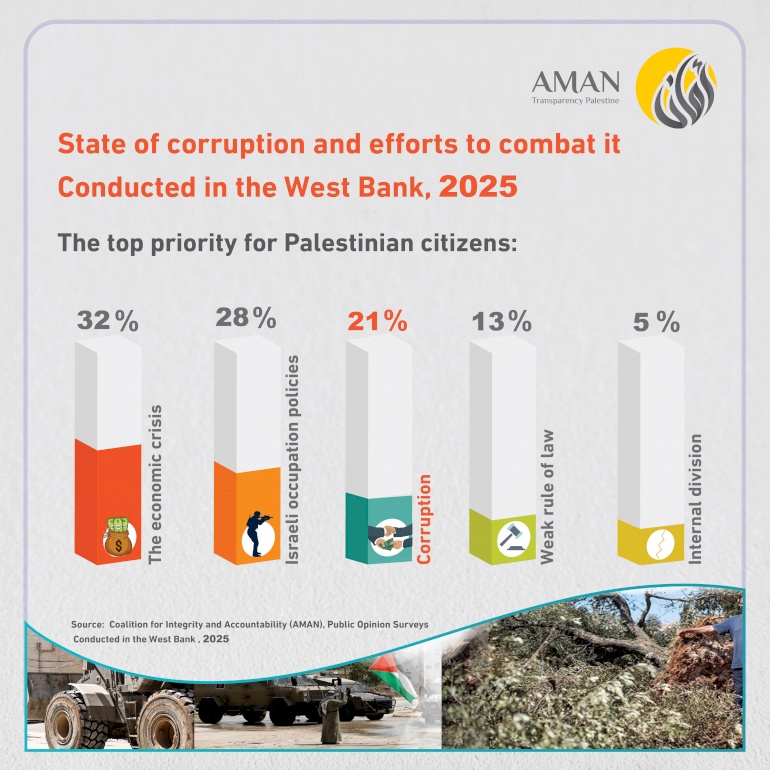
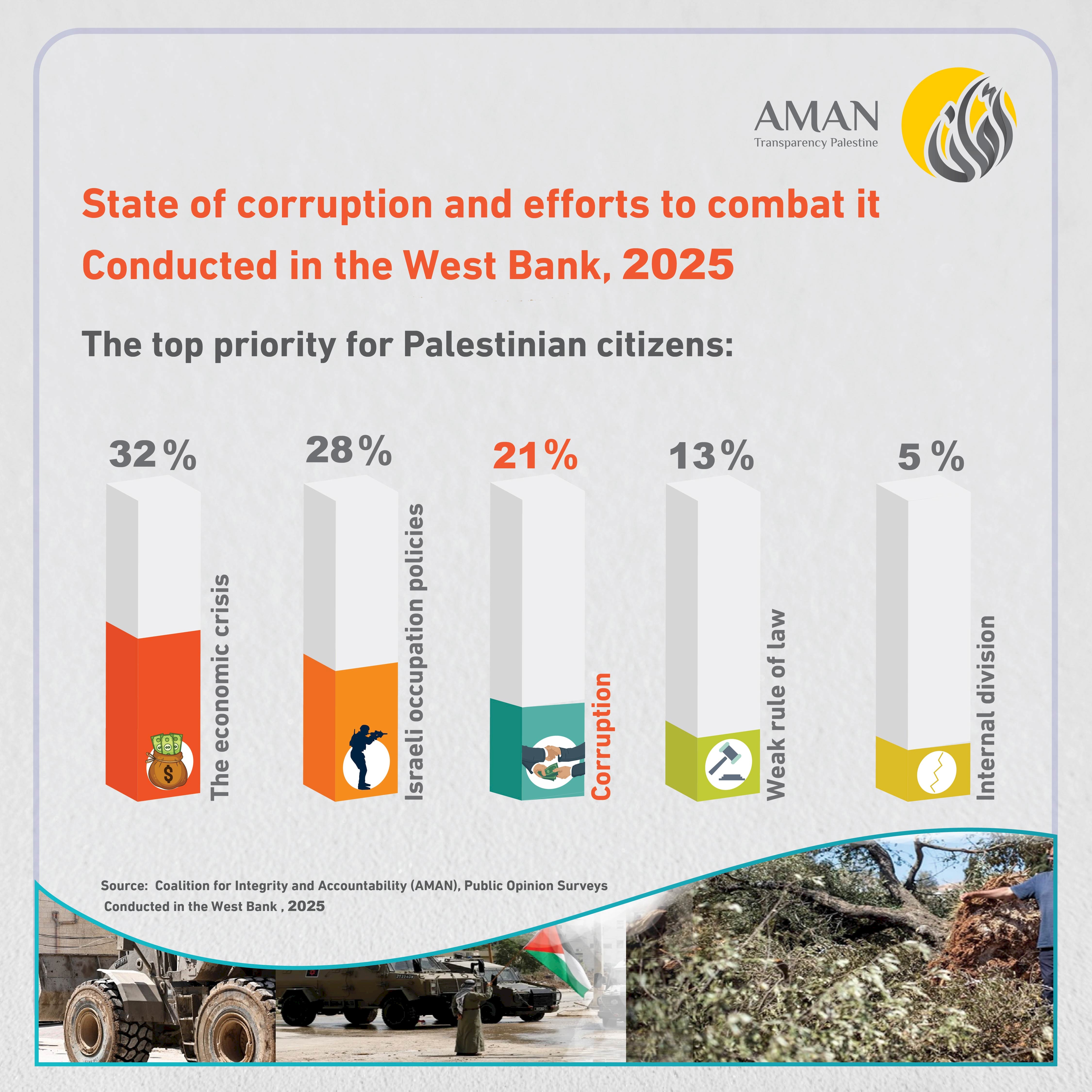
In the West Bank, the survey was conducted from 20 to 29 October 2025 to track changes in citizens’ perceptions and awareness regarding the state of corruption and anti-corruption efforts. The economic crisis emerged as the top priority for Palestinian citizens, with 32% of respondents identifying it as the main issue that must be addressed first. This was followed by Israeli occupation policies and practices at 28%, the spread of corruption at 21%, weak rule of law at 13%, and the ongoing internal division at 5%.
These findings reflect a difficult living reality amid the consequences of war, including widespread exploitation and rising prices. This has made combating corruption linked to war traders an urgent priority for citizens, alongside housing and relief needs, which are seen as essential for survival and securing the minimum requirements of life.
Decline in the Percentage of Citizens Who See Corruption as Widespread in Palestinian Society
The survey also showed a decline in the percentage of citizens who believe that corruption is widespread in Palestinian society, falling to 63% in 2025 compared to 77% in 2024.
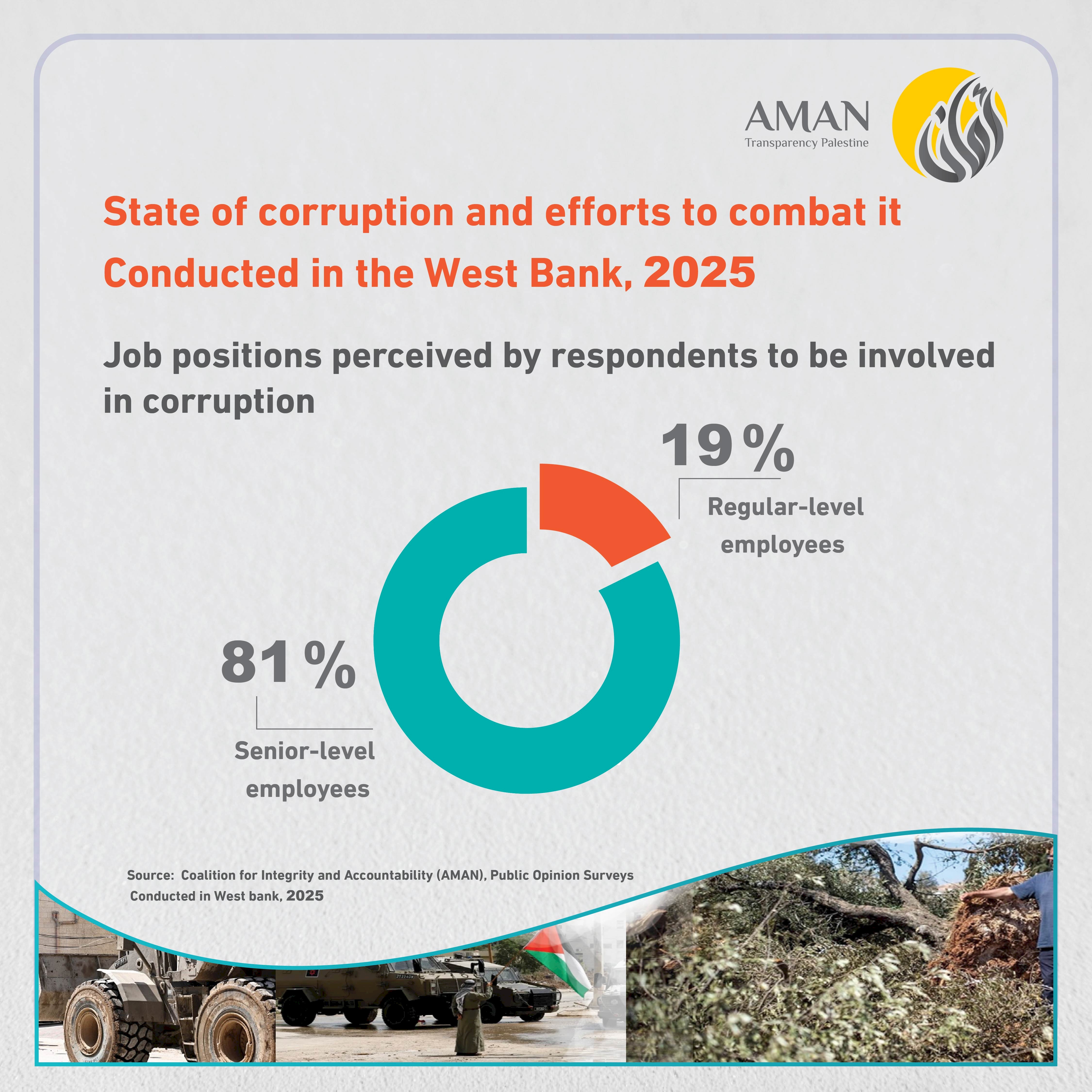
Regarding the profile of those engaging in corruption, 81% of respondents believe it is carried out by senior-level employees, down 9 points from 2024, while the share of those who believe corruption is committed by regular-level employees rose to 19%, compared to 10% the previous year.
Percentage of Respondents See the Executive Authority as Most Vulnerable to Corruption
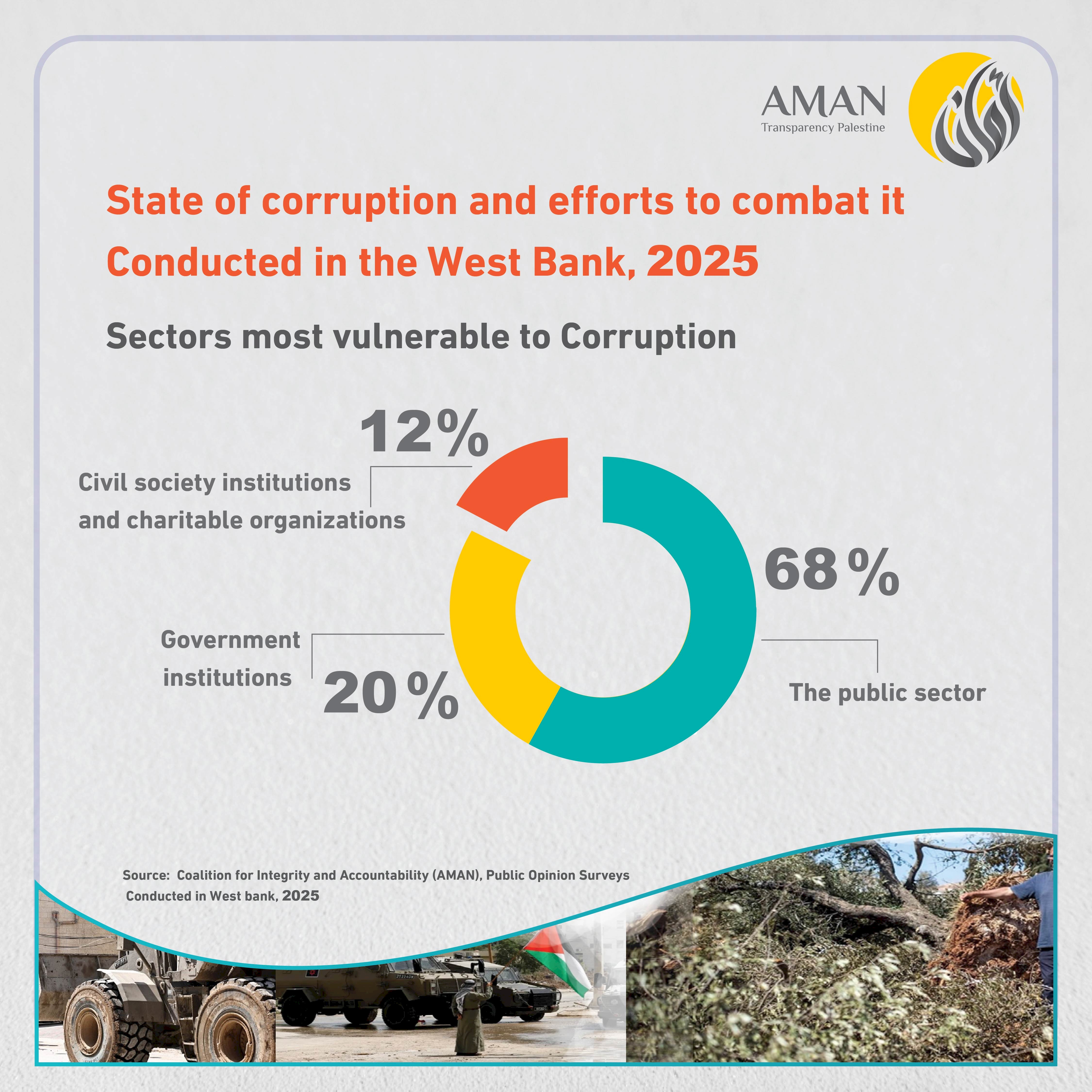
The public sector ranked first among the sectors most vulnerable to corruption in the West Bank, with 68% of respondents identifying government institutions, 20% pointing to companies managing public facilities, followed by local authorities at 6%, and civil society institutions and charitable organizations also at 6%.
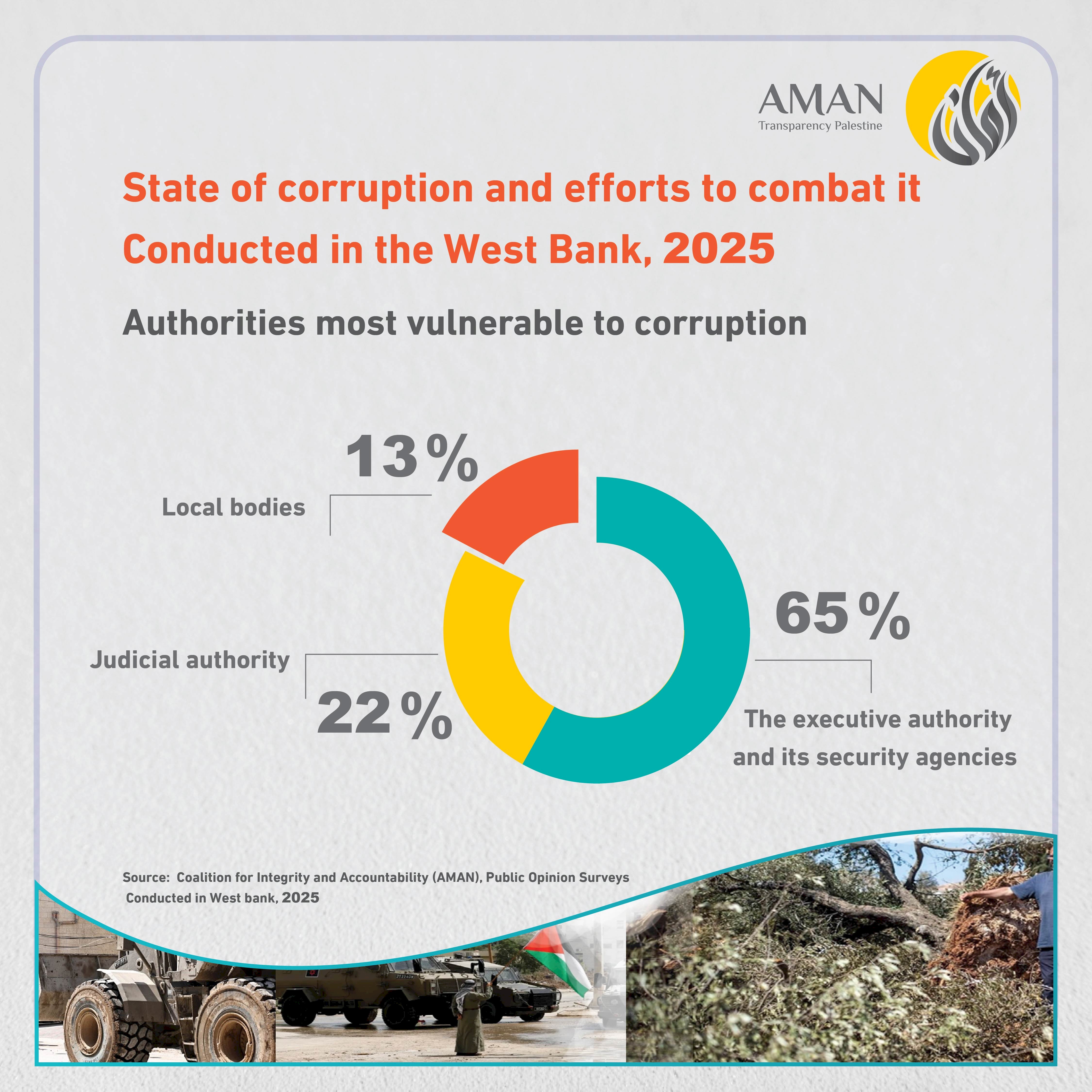
In addition, 65% of respondents believe that the executive authority and its security agencies are the most vulnerable to corruption, compared to 22% who point to the judicial authority (regular and Sharia courts) and 13% who identify local bodies (municipalities and village councils).
Non-Ministerial Institutions Most Vulnerable to Corruption
Twenty-eight percent of respondents identified security institutions as the most vulnerable to corruption, followed by the Crossings and Borders Authority at 16%, the Civil Affairs Authority at 12%, the Water Authority at 11%, and the President’s Office at 10%. Other institutions did not exceed 8% each.
The results show that institutions at the top of the list are those fully or partially under the supervision of the President’s Office, reflecting weak accountability and oversight by the Office. Government-affiliated institutions such as the Water, Energy, and Lands Authorities ranked lower.
In addition, 65% of respondents believe there is corruption within the judicial authority. This shows improvement compared to 2024, when 78% held this view, attributed to legislative reforms in the justice system that accelerated court procedures and strengthened the handling of corruption cases. Regarding the entities most vulnerable to corruption within the judicial authority, 35% pointed to public prosecution members, followed by judges at 34%, and court employees at 31%.
Most Prevalent Corruption Crimes: Embezzlement and Nepotism
The survey results show that the most prevalent corruption crimes are embezzlement of public funds (25%) and nepotism and favoritism (22%), followed by abuse of power (13%), and then credit abuse and money laundering resulting from corruption and bribery, each at 9%.
Increase in Food and Drug Corruption Crimes in 2025 Linked to Weak Accountability
Eighty-three percent of respondents reported an increase in food and drug corruption crimes in 2025 compared to 82% in 2024, attributing this mainly to weak accountability (38%), the prevalence of favoritism (34%), and the lack of deterrent penalties (16%). Thirty-nine percent considered license revocation the most effective measure, compared to 37% favoring imprisonment and 24% proposing the creation of a blacklist.
This phenomenon is linked to declining incomes, rising unemployment, and higher prices, which drive demand for cheaper goods despite lower quality, highlighting the need to improve economic conditions and strengthen oversight.
Appointments and Promotions Ranked Most Vulnerable to Corruption
According to the results, appointments and promotions ranked first as the area most vulnerable to corruption, with 38% of respondents identifying it as such, followed by health services at 19%, and humanitarian and social in-kind and cash assistance at 16%. Nine percent pointed to higher education, and another 9% to customs and taxation.
Use of Intermediaries to Access Public Services
The 2025 survey results show that 37% of respondents approached public institutions to obtain services, and of these, 42% admitted using intermediaries to facilitate access. Respondents explained that they relied on intermediaries due to fear that those who were not entitled might receive the services because of corruption (27%), to save time and bypass bureaucratic procedures (24%), concern over limited opportunities to obtain services (15%), lack of trust in the integrity of service providers (13%), and cultural or social considerations (10% each).
Decline in Perceived Influence of Nepotism in Government Appointments
Regarding appointments and promotions, 86% believe that favoritism still exists in regular government appointments, down from 94% in 2024. Similarly, 88% believe it occurs in senior government positions, compared to 94% last year. Despite the decline, the results reflect the persistence of the phenomenon and ongoing citizen frustration.
Increase in Perceptions of Bribery
The 2025 survey recorded an increase in respondents who believe that bribery is rising, with 17% reporting that they or a family member paid a bribe or gave a gift to an official, compared to 8% in 2024. Thirty-one percent considered the health sector most susceptible to bribery, followed by education at 26%, and permits and official authorizations at 26%, while other services did not exceed 6%.
Citizens See Media Role in Anti-Corruption Efforts as Limited
Citizens continue to perceive the media’s role in combating corruption as limited. Forty-one percent considered its effectiveness good or moderate in 2025, while 54% viewed it as weak, although perceived effectiveness increased from 32% in 2024. Sixty-six percent of respondents consider digital media the most effective in exposing and highlighting corruption cases during the year.
Effectiveness and Oversight of Anti-Corruption Bodies
Forty-four percent of respondents believe that anti-corruption bodies are effective or moderately effective, while 73% feel these bodies do not operate independently, compared to 18% who see them as independent. Thirty-seven percent identified the Prime Minister’s Office and ministers as the most influential in interfering with anti-corruption bodies, followed by the President’s Office at 28%, security agencies at 21%, governors and mayors at 7%, and party leaders at 6%. Thirty-five percent of respondents considered the role of civil society institutions in anti-corruption efforts effective or moderately effective.
Barriers to Reporting Corruption
Twenty-three percent believe that insufficient protection for whistleblowers and witnesses prevents reporting. Fifty-three percent said they would report as witnesses, while 47% would not, despite an increase in those willing to report. Among victims of corruption, 58% would report, compared to 42% who would not. Forty-one percent see reporting as a citizen’s right, 45% as a legal duty, and 14% consider it socially undesirable.
Despite the presence of a whistleblower protection system and the legal duty to report, many citizens still refrain from doing so. The main reasons cited include insufficient protection for whistleblowers and witnesses (23%), limited awareness of the different forms of corruption (20%), uncertainty about which authority handles complaints (18%), doubts about the effectiveness of reporting (14%), fear of retaliation (10%), low confidence in complaint units (9%), and viewing reporting as a form of snitching (6%).
Citizens See Anti-Corruption Efforts as Insufficient
Ninety percent of respondents consider anti-corruption efforts insufficient, attributing this primarily to weak transparency in state institutions (34%), weak political will to hold corrupt individuals accountable (28%), weak deterrent effect of applied penalties (28%), and the absence of officials serving as role models in upholding integrity and safeguarding public resources (10%).
Pessimism About Corruption Levels in 2026
Sixty-one percent of respondents believe that the level of corruption increased in 2025, and the same proportion expects it to rise in 2026.
Despite a slight improvement in expectations regarding the future of corruption in the West Bank, pessimism remains high due to frustration and uncertainty about the future.
The Gaza Strip: 30% of Respondents Identify Combating Corruption and War Profiteers as Top Priority
Separately, the Coalition for Integrity and Accountability (AMAN) conducted a second public opinion survey on the state of corruption and anti-corruption efforts in the Gaza Strip during the war, as well as citizens’ expectations for the future. The field research, carried out between 8 and 15 November 2025, aimed to assess several indicators of corruption’s presence and spread in specific areas during the conflict and to anticipate its trends in the coming period.
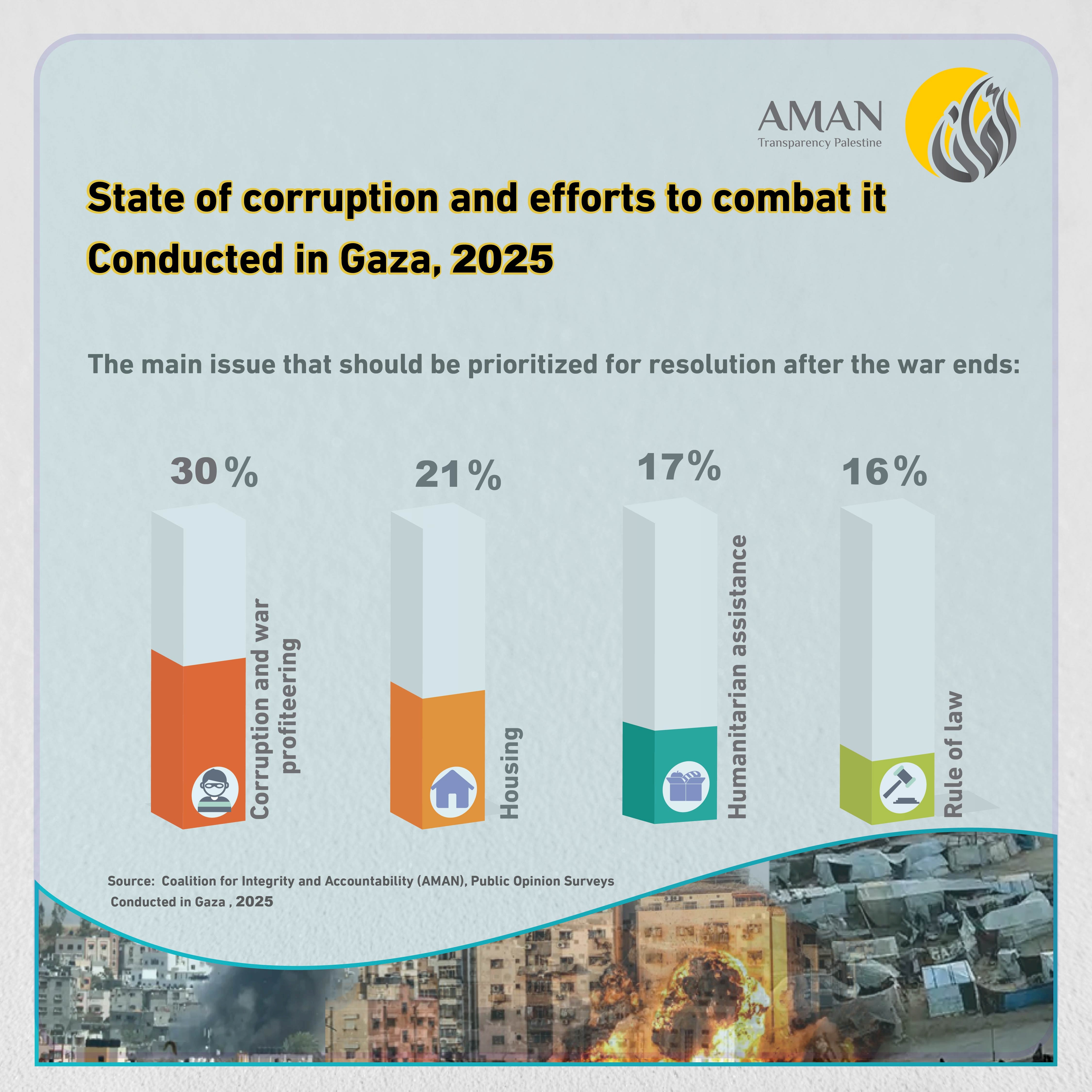
The survey results indicate that combating both corruption and war profiteering topped the list of priorities that citizens see as needing urgent attention, with 30% of respondents identifying it as the main issue that should receive first priority.
Housing emerged as the second most pressing issue at 21%, followed by the provision of relief and humanitarian assistance at 17%, and ensuring the rule of law and its enforcement at 16%. Nine percent of respondents considered securing education as the priority for the next phase, while 8% viewed health services as the main concern.
These findings reflect a difficult living reality amid the consequences of war, including widespread exploitation and rising prices. This has made combating corruption linked to war profiteers an urgent priority for citizens, alongside housing and relief needs, which are seen as essential for survival and securing the minimum requirements of life.
Humanitarian Assistance Tops the List of Sectors Most Vulnerable to Corruption in the Gaza Strip
Regarding the areas where citizens believe corruption was most widespread in 2025, 35% of respondents identified humanitarian assistance, both in-kind and cash, as the sector most vulnerable to corruption. Health services ranked second at 20%, followed by housing services at 17%. Twelve percent pointed to water services as the most exposed to corruption, 11% to sanitation services, and 6% identified the banking sector as most affected.
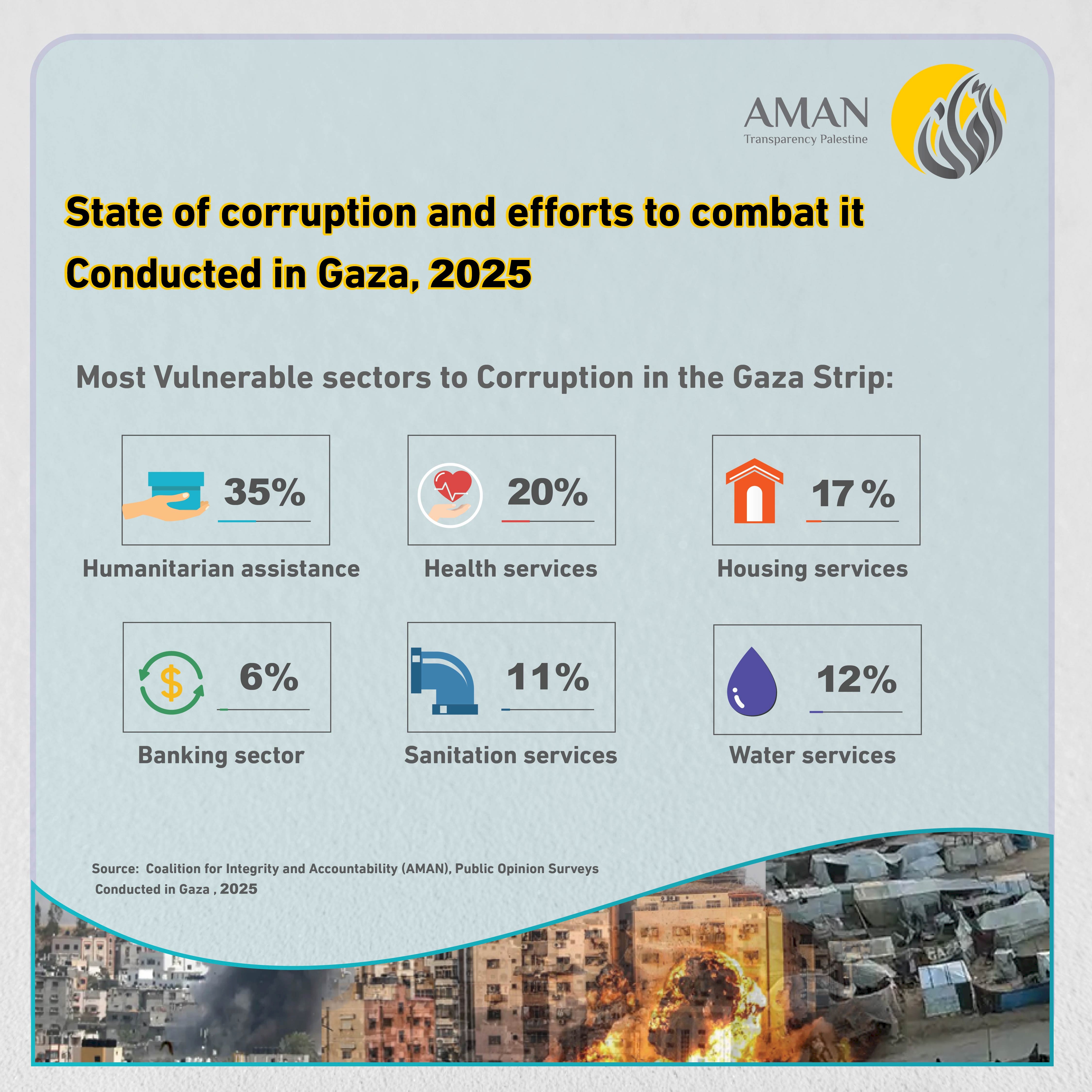
Despite the increase in aid following the implementation of the ceasefire agreement, the results indicate that concerns over the integrity of its management persist. Limited resources and high demand underscore the sensitivity of sectors directly linked to basic survival needs.
35% of Respondents Cite Lack of Adequate Protection for Whistleblowers as the Main Barrier to Reporting Corruption in the Sector
Regarding reasons for refraining from reporting corruption, 35% of respondents identified the lack of adequate protection for whistleblowers and witnesses as the main barrier, while 32% cited not knowing which authority is responsible for receiving corruption complaints. Twenty-one percent pointed to a lack of confidence in the effectiveness of reporting, believing that no action would be taken against corrupt individuals, and 12% considered the absence of genuine political will to combat corruption the most significant obstacle.
These findings indicate that the erosion of the rule of law and the weakening of the justice system and oversight institutions during the war have deepened citizens’ sense of vulnerability and undermined confidence in accountability mechanisms.
Cautious Optimism Among Gaza Residents Regarding Corruption Levels After the War
Concerning future expectations, the survey found that 41% of citizens in the Gaza Strip believe the level of corruption will decrease after the cessation of hostilities, 32% expect it to remain the same, and 25% anticipate it will increase.
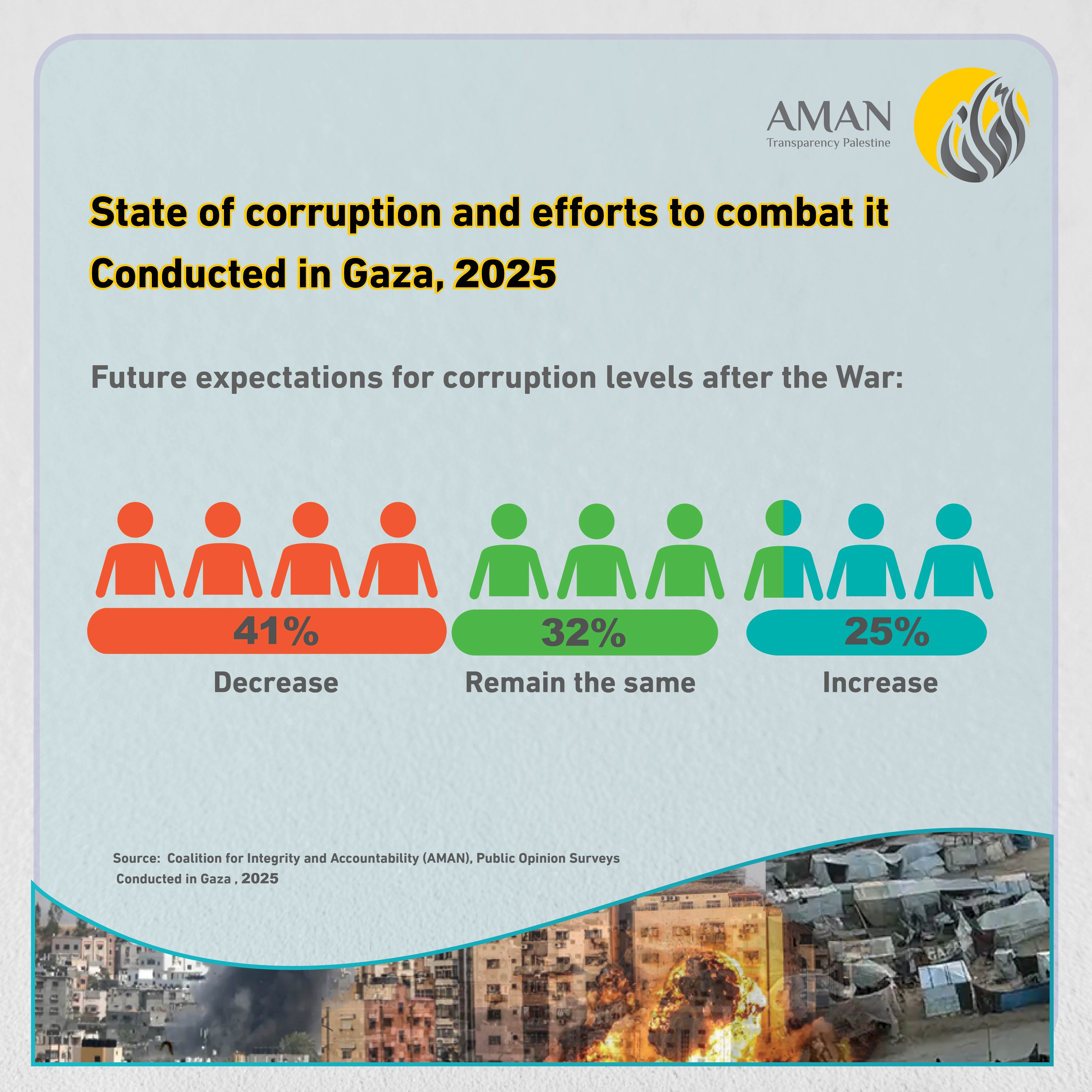
These results indicate a measure of cautious optimism among some citizens about the potential for improvement in the post-war period, fueled by hopes for local and international oversight and reforms in the management of aid and reconstruction, even as uncertainty continues to dominate the current situation.